The Astrology Center of America, 207 Victory Lane, Bel Air, MD 21014
Tel: 410-638-7761; Fax:410-638-5154; Toll-free (orders only): 800-475-2272
Home Author Index Title Index Subject Index Vedic Books Tarot E-Mail: Dave


Astrological Aspects, page 2


Aspects, page 1

Indicates a book on our Top Ten list. If you would like to find more books like it, click on the star.
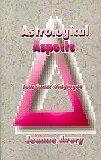

ASTROLOGICAL ASPECTS, Your Inner Dialogues - Jean Avery, $29.95

Contents:
1. What is an aspect & how to find your own
2. The Sun
3. Aspects to the Moon (Moon-Sun)
4. Aspects to Mercury (Mercury-Sun, Mercury-Moon)
5. Aspects to Venus (Venus-Sun, Venus-Moon, Venus-Mercury)
6. Aspects to Mars (Mars-Sun, Mars-Moon, Mars-Mercury, Mars-Venus)
7. Aspects to Jupiter (Jupiter-Sun, Jupiter-Moon, Jupiter-Mercury, Jupiter-Venus, Jupiter-Mars)
8. Aspects to Saturn (Saturn-Sun, Saturn-Moon, Saturn-Mercury, Saturn-Venus, Saturn-Mars, Saturn-Jupiter)
9. Aspects to Uranus (Uranus-Sun, Uranus-Moon, Uranus-Mercury, Uranus-Venus, Uranus-Mars, Uranus-Jupiter, Uranus-Saturn)
10. Aspects to Neptune (Neptune-Sun, Neptune-Moon, Neptune-Mercury, Neptune-Venus, Neptune-Mars, Neptune-Jupiter, Neptune-Saturn, Neptune-Uranus)
11. Aspects to Pluto (Pluto-Sun, Pluto-Moon, Pluto-Mercury, Pluto-Venus, Pluto-Mars, Pluto-Jupiter, Pluto-Saturn, Pluto-Uranus, Pluto-Neptune).

Comment: From page 24: In this book, we are aiming for growth .... therefore, we will deal only with conjunctions & hard aspects. These stronger dialogues seem to indicate situations that simply must be resolved. It appears that we grow through pain, rather than ease, so the more tensions & conflicts in the chart, the more interesting & dynamic the life of the individual. (Isn't it nice to know that someone thinks your life is interesting?) At the start of every chapter is the planet's house position & how house energy is expressed by the general aspects the planet has. Following that, the aspects for the planet are described. The author cites individuals for each delineation, though neither charts nor birth data are given. She emphasises psychological factors.

AFA, 382 pages.


THE YOD, Its Esoteric Meaning - Joan Kellogg, $14.00
Contents:
Preface; Foreword;

1. Definition of the Yod; 2. What is the Yod?; Synthesizing the Yod in the chart; 4. 1st house activating point - 7th house foot; 5. 2nd house activating point - 8th house foot; 6. 3rd house activating point - 9th house foot; 7. 4th house activating point - 10th house foot; 8. 5th house activating point - 11th house foot; 9. 6th house activating point - 12th house foot; 10. 7th house activating point - 1st house foot;

11. 8th house activating point - 2nd house foot; 12. 9th house activating point - 3rd house foot; 13. 10th house activating point - 4th house foot; 14. 11th house activating point - 5th house foot; 15. 12th house activating point - 6th house foot; 16. Final thoughts. Appendix (12 chart examples: 6 single, natal yods; transiting yod; 2 yods; 2 double yods; 3 doubles & 2 singles; 2 quadruple yods.

Comment: Of the various books on the Yod, this small one is my personal favorite. Kellogg's esoteric meanings focus on the house opposition inherent between the "foot" of the yod & midpoint of the two sextile planets. Like a bow & arrow, or a tuning fork, she says the foot is mundane karma, the midpoint the esoteric mission. The aspect will eventually be triggered, or sounded.

AFA, 82 pages.


THE YOD BOOK - Karen Hamaker-Zondag, $19.95

Contents:
Preface
1. What is a Yod? - technical background of the Yod configuration
2. Unaspected planets
3. Family themes & the generation problem
4. Effects of Yods & unaspected planets
5. Interpreting Yod configurations
6. Interpreting the unaspected planets & duets
7. The shadow & evil
8. Unaspected planets & temporary Yods by progression & transit
9. How should we deal with Yods & unaspected planets?
10. Yods & unaspected planets in the astrology of relationships
11. Yods, a duet & unaspected planets: Diana, Charles & Camilla
12. Yods & unaspected planets in action: Monica Lewinsky, Linda Tripp, Kenneth Starr, William Jefferson Clinton
13. Life & death
14. Yods & a duet in C.G. Jung's childhood
15. Case files of Yods & unaspected planets: Helen - temporary Yods in transit, Jacqueline - from external structure to internal flows, Christina
16. Gemma - your own form within the generational theme
17. Living with a number of Yods - Esther's experience
18. In conclusion

Bibliography
Index
About the author.

Comment: The ultimate book on yods & unaspected planets. Yods are formed when two planets are inconjunct (150 degrees apart) from a third, and sextile to each other. So Mars at 1 degree Aries is inconjunct Venus at 1 degree Virgo, while the moon at 1 degree Aquarius is inconjunct to Venus & sextile to Mars. In this book, yods as family themes & generation problems; effects of yods & unaspected planets; interpreting yod configurations; interpreting unaspected planets & duets; unaspected planets & temporary yods by progression & transit; yods & unaspected planets in relationships, more. Case studies include Princess Diana, who had a very interesting yod. The author relates yods back to house rulers, which reminds us of her excellent book, The House Connection, which is sadly out of print. (I would gladly reprint it. Anyone listening?)

Weiser, 324 pages.


PHASES OF THE MOON, A guide to evolving human nature - Busteed & Wergin, $18.95

Contents:
Acknowledgment
Introduction

Part 1: Cycles, phases and modern astrology
1. Cycles and phases
2. The elements of the lunar mandala
3. The skeleton of time
4. In and out of phase

Part 2: A round of 28 phases
5. Phases of the youthful body
6. Phases of the proud heart
7. Phases of the creative mind
8. Phases of the emerging spirit
9. Some ideas on diachronic astrology
10. The moon phase in a birth chart
11. Examples

Appendices:
A. Phases of well known people
B. Symbols used in this book
C. Division by symmetry
D. How to figure the moon phase
E. Glossary of terms
F. Bibliography.

Comment: How to read a chart based on the phase of the moon, day by day. Rudhyar toyed with the idea - and the authors give him credit - but they say the idea actually goes back to William Butler Yeats (1865-1939) & his book, A Vision (1925). Yeats was far more than a poet, but I digress.

Each of the four Phase chapters (see above) covers one week of lunar travel & is divided into seven discreet phases phases. The first is from new moon to first quarter (youthful body), the second, from first quarter to full (proud heart), etc. These are allotted to the various signs. The first phase is to Pisces, the next three to Aries, then the final three youthful bodys to Taurus.

In the second quarter, the first phase goes to Gemini, with Cancer getting the next three & then Leo the final three. (This is how you divide 28 by 12.) In addition to the sign, each day's phase has a planetary ruler & co-ruler. Each day's phase represents a two-year age. The first phase (new moon) is 0-2, the next day is 2-4, day three is 4-6, etc.

Here is a typical delineation: Speaking of Phase 14 (my own), did you know that I receive everything at the hands of others-? That people willingly take up the burdens & responsibilities which [I] drop-? And that many people find the native [me!] incredibly beautiful & act out of infatuation with him-? (Girls! Where are you!?)

Phase 14 continues,

Unimpressed by hero-worship, or even by confessions of love, the native is prepared to drop everything at once if a vision or a feeling directs him elsewhere. As a result of this fidelity to purpose, he projects his ideas upon civilization so strongly that others come to identify his will with their own deeper desires. It wouldn't be unusual, either, for the native to live his entire life without noticing his expanding influence. But time will bear full witness to his excellence, even posthumously. (all from pg. 102)
My Sun/Moon phase? I was born six hours ahead of a full moon. A lot of people are born on full moons. Find your unique phase.

AFA, 209 pages.


UNDERSTANDING ASPECTS: THE SEXTILE - Alan Epstein, $12.95
Contents:

Acknowledgements
Preface

Part 1: Aspect theory
Part 2: Pyschology of the sextile

  • Basic issues
  • Sun through Pluto, and the four angles
Part 3: Planetary combinations (delineations)
Part 4: The chart of Martin Luther King, Jr.

Comment: In Part 1, the author develops a sign-based theory of aspects. Planets, by virtue of being in a sign, have three different attributes: Triplicity (fire, air, water, earth), quadruplicity (cardinal, fixed, mutable), or gender (male/female). A pair of planets can have all three, or two, or one, or none of these factors in common. Planets in the same sign have all three in common. Planets in trine or opposition have two. Planets in square or sextile, only one. It is on this basis that Epstein classifies the sextile as sometimes a difficult aspect, as they have only gender in common. Aspects to Epstein are sign based, not degree based. A planet at 1 degree of Aries, and another at 29 degrees of 29 Cancer (118 degrees apart) act as if in square, not a (disassociate) trine. This is my own view of the matter, but I digress. Epstein tries to justify minor aspects in this system (51, 72, 135), which I think futile. He also has interesting notes on parallels.

Epstein says sextiles are an aspect of assistance. If they only have gender in common, let us think about that. Yes, a female may help another female, or a male may help another male, all as peer to peer. This is true. But if we think about aspects this way, we are immediately struck by the fact that male to female, or female to male, is by far a stronger pairing, even though it can be unstable (read: divorce) by comparison to a casual same-sex form of assistance. Back in 1997 when this book was published, Epstein promised more writing about aspects. Regrettably, these have yet to appear.

In Part 2, Epstein gives an overview of each planet when in sextile relationship. The sextile sun represents a weak father - or an overbearing one, by compensation. The moon in sextile is a weak mother. Mercury sextile indicates learning disabilities, etc. Sextiles to the ascendant indicate lack of disciple, or too much discipline, when a child. In Part 3, delineations are based on this conceptual framework.

There are a lot of ideas here, though I think the book itself needs work.

Trines Publishing, 174 pages.


ASPECTS BETWEEN SIGNS - Sophia Mason, $8.00

Contents:

Introductory

Aries aspects
Taurus aspects
Gemini aspects
Cancer aspects
Leo aspects
Virgo aspects
Libra aspects
Scorpio aspects
Sagittarius aspects
Capricorn aspects
Aquarius aspects
Pisces aspects

Comment: The real story of aspects is how one sign relates to another sign. This is fundamental. The planets in those signs are merely the gloss that triggers the relationship.

In this book, Mason goes sign-by-sign. When planets are conjunct in Aries, for example, Aries energy tends to do "X" to them, which Mason gives, in detail, both good & bad, and for natal, forecasting & lunation charts. (Mason excelled in the use of lunation charts.) When she then turns to other aspects, Mason does not merely say that sextiles to Aries are like this, squares are like that, etc. Instead, she is far more specific. The sextile from Aries to Gemini is treated separately from the sextile from Aries to Aquarius. The square from Aries to Cancer is not the same as the square from Aries to Capricorn. Here is Aries - Cancer square:

This is somewhat of a difficult aspect to have in one's natal chart. The Cancerian nature is Watery & the Arian sign is Firey. Fire & Water cannot mix, as a result, the will is influenced by feeling. The subject leads an intense, emotional life colored by variable moods & impulsive behavior. From time to time, there will be periods of emotional outbursts or hypersensitivity. This is further aggravated by explosive tempers & impatience.

The psychological influence is rather complexed. On one hand, there is a tendency towards a frank & outspoken manner, often hurting others through their lack of tact & understanding. Yet, on the other hand, when they are on the receiving end, they will withdraw at the first hint of criticism or reproach & recede into a protective, invisible shell.

These natives are extremely independent (both being Cardinal signs), and should seek a vocation where they can be their own boss. Either sex will require an understanding marriage partner who will recognize & accept their rebellion against restriction.

In forecasting, the Lunation or transiting planet in Cancer, can indicate problematic conditions with family members. The Arian sign promises a new undertaking, experience or event with much activity required. However, cooperation from family members may be lacking. Best to go it alone to avoid possible quarrels. (pgs. 4-5)

By contrast, here are the opening words to the Aries - Capricorn square:
Not at all emotional like the Aries-Cancer square, for Capricorn is reserved, controlled & ambitious. These natives are not afraid of hard, dangerous or dirty work. Just so long as it promises to improve their career or lot in life. Persosnal ambitions may be thwarted by others or held in check through delays or circumstances beyond their control. An excellent configuration for the military or political career. (pg. 11)
(The contrast in Mason's handling of these two squares, Aries to Cancer, and Aries to Capricorn, leaves a lot of the other aspect books in the dust, but I digress.)

Delineations include conjunctions, sextiles, squares, trines, inconjuncts & oppositions.

The directness & intensity reminds me of Grant Lewi's Sun-Moon delineations in Heaven Knows What, which at the moment is out of print. Which, if you've never seen Lewi's work, is high praise. Epstein might want to study this small book.

Aquarian-Cancerian Publications, small paper, 85 pages.


MINOR ASPECTS - Sakoian & Acker, $7.00

Contents:

There are no chapters, nor section headdings in this small book. Brief overview of the following aspects: Mercury decile (36) Pluto, Mars quintile (72) Neptune, Moon nonagon (40) the Sun, Saturn semi-sextile (30) the Sun, Sun semi-sextile (30) Mars, Sun semi-sextile (30) Venus, Pluto septile (51-3/7) Neptune, Saturn sesquiquadrate (135) Neptune, Mars semi-square (45) Uranus and more.

Comment: The author's conceptual basis for the interpretation of minor aspects is based on decanates & duads. An example:

The approaching quintile corresponds to t5he Taurus decanate of Capricorn & the Leo duad of Capricorn. This gives a Saturn-Venus-Moon-Sun-Pluto combination, suggesting good organization, energy & dynamic self-expression in artistic, social & business expression. In this case (birth of June 2, 1940, 8:20 am, Washington DC), it would indicate a practical knowledge & organizing ability in art, beauty & the creation of artistic expressions of various types. This quintile is strengthened by the fact that the Moon & Venus are in mutual reception. (pg. 8)
This is not a cookbook. This book gives concepts that you can use. At two places, the authors recommend their book, Zodiac Within Each Sign, where you can find more useful information about dwads, which are the essential key to reading minor aspects.

Self-published, 27 pages.


COSMOPSYCHOLOGY: The Engine of Destiny - Marc Robertson, $15.00

Contents:

Preface
Most of us are asleep
Our god is science now
But we are waking
To a new vision
Reading the cycle in lives
The planets in pairs
Ahead & behind

Comment: This is an astrological exhortation, but as the author feels the word "astrology" has become disreputable, he substitutes the word Cosmopsychology. Which is, essentially, astrological psychology.

The book is based around the lunation cycle, the phases & sub-phases, in other words, every 45 degrees, and is then extended to selected planetary pairs in the same sort of cycle. The sub phases are:

New: performer, actor, leader (0 degrees)
Worker: crescent (45 degrees)
Activist, fighter, pusher, doer: 1st quarter (90 degrees)
Analyst: gibbous (135 degrees)
Seeker: full moon (180 degrees)
Believer: dissemenating (225 degrees)
Changer: last quarter (270 degrees)
Prophet: balsamic moon (315 degrees)
For each of these, Robertson gives a Sun/Moon delineation. For new, he also gives Saturn/Moon (eg, the conjunction,etc.), Jupiter/Mercury, and Mars/Venus. For Believer, in addition to Sun/Moon, he also gives Saturn/Moon, Jupiter/Mercury, Mars/Venus, Saturn/Jupiter and Uranus/Saturn.

On page 36, he explains his selection: I have skipped some aspects under some functions because the didn't seem to be that important in interpretation. While it's true that Sun, Mercury & Venus do not form the full spectrum of 360 degree aspects, Jupiter/Saturn is a 20 year cycle, Saturn/Uranus around 40, which means they are generational, not individual. I note the complete omission of all solar aspects, save to the moon, and all lunar aspects, save that to Saturn.

The front of the book says, A new & simpler approach to astrological birth charts --- A "street psychology."

AFA, 83 pages.


ASPECTS TO HOROSCOPE ANGLES - Vivia Jayne, $8.95

Contents:

Preface
Aspects to the horoscope angles in radical charts
The three local planes: Midheaven, Ascendant & Vertex
Delineation of lights & planets to angles
Aspects of planets & lights to the midheaven & their meanings
Aspects of planets & lights to the ascendant & their meanings
Examples

Appendix.

Comment: A brief overview of aspects to the mid-heaven & ascendant. Also emphasised is the use of angles in rectification of birth time. Some 15 sample charts, including Henry Kissinger & astrologer L. Edward Johndro, all rectified by Vivia and/or Charles Jayne. Newly reset & reprinted by the AFA.

AFA, 47 pages, small paper.


QUINTILES & TRE-DECILES - Dusty Bunker, $12.95

Contents:

Introduction
In the beginning

Part 1: Aspects revealed:
1. The numbers
2. The Vesica Piscis & the divine triangle
3. The quintile & tredecile explained
4. 36, the decile: the oath of secrecy
Footnotes

Part 2: Aspects delineated:
Quintile & tredecile chart & definitions
Forty astrological charts as examples (with biographies)
Personality compilations by aspect
Sources of charts
Footnotes
Suggested reading list

Comment: A number analyst & astrologer, the author explores the little-known 72 degree (quintile) & 108 degree (tredecile) aspects & explains their cosmic significance in the individual chart. Said to have been known only to Chaldean initiates, the numerological & astrological significance of these two aspects unfold in four chapters. Numerology, sacred geometry, Masonry, Egyptian symbology & astrology transport the reader to a time when numbers were an "extreme reduction of philosophic thought" & "concrete definitions of energetic formative principles of nature" rather than symbols of quantity.

The forty charts each have about 2/3rds of a page of commentary, only the last paragraph of which is astrological. The analysis for Carl Sandburg is typical:

Carl Sandburg is regarded as the poet of the prairie. Much of his work celebrated industrial & agricultural America. With his Sun, Mercury & Jupiter tredecile Neptune, we can see why he was called "the Poet of the Prairie." (pg. 149)

Whitford Press, 177 pages.


HOW TO BE A GREAT ASTROLOGER, The Planetary Aspects Explained - James Braha, $19.95

Contents:

Acknowledgements
Introduction
Poem by Babaji, a Himalayan saint
How astrology works
The moon's nodes
The moon's nodes in the signs and houses
Planetary aspects
Aspects to the Sun
Aspects to the Moon
Aspects to Mercury
Aspects to Venus
Aspects to Mars
Aspects to Jupiter
Aspects to Saturn
Aspects to Uranus, Neptune & Pluto

Services of James Braha
Reading List.

Comment: This is a book on traditional western aspects, eg, the Ptolemaic ones: Conjunction, sextile, square, trine & opposition. For each planet, Braha groups his essays as conjunct, sextile/trine, square/opposition. He includes occasional notes on how Vedic astrology views the planets, but it is not his primary focus.

The exception is the chapter on nodes, which, while avoiding Vedic jargon, is thoroughly Vedic in viewpoint. He combines nodal sign with nodal house, but at the end of each delineation, says to ignore the nodal sign. Which is correct. The nodes have value in their house domiciles, not their signs. I presume he included both as to not confuse the novice. A further note: If the sign on the cusp of the house is not the same as the sign the node is in, read for the next house. For example, if the north node is in the 5th in Aries, but the sign on the 5th cusp is Pisces, with Aries on the 6th, read the 6th house, not the 5th, and then select the one that sounds better to you (my system, not Braha's).

The delineations are well-nuanced & shrewdly written, with a karmic slant. This is one of the best books on aspects. On the front cover, the title is printed in gold foil on a black background. It simply will not scan.

Hermetician, oversize paper, 256 pages.


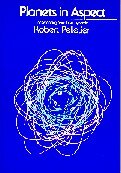
PLANETS IN ASPECT, Understanding your inner dynamics - Robert Pelletier, $19.95

Contents:

Foreward, by Marcia Moore
Directions
Introduction

1. Conjunctions
2. Sextiles
3. Squares
4. Trines
5. Inconjunctions
8. Oppositions

Index

Comment: The back of the book confirmed my suspicion. First published in 1974, this was the first of the Planets In... series. I heard the story that someone with money to spend (I forget the name) was offering to pay by the word. Rob Hand heard about it & went to town (Planets in Transit, Planets in Composite, Planets in Youth, etc.), but I digress. The Planets In.... series are the biggest astrological cookbooks ever published.

On the back cover, it says,

Every major aspect (conjunction, sextile, square, trine, opposition, inconjunct) is covered, 314 aspects in all, 300 words per aspect, thumb-indexed for easy reference.
300 words per delineation is a lot. The Planets In.... series tend to be wordy, but, on the other hand, they also tend to cover most of the bases, as in this case. I remember these from the '80's, when, by comparison to the other books on the shelf, these were a lot more expensive than they are now.

Whitford, 339 pages.


Aspects, page 1


The Astrology Center of America

207 Victory Lane, Bel Air, MD 21014
Tel: 410-638-7761; Fax:410-638-5154; Toll-free (orders only): 800-475-2272

Home Author Index Title Index Subject Index Vedic Books Tarot E-Mail: Dave


Established 1993, The Astrology Center of America is owned & operated by David Roell.
This entire site (AstroAmerica.com) is copyright 1996, 1997, 1998, 1999, 2000 by William R. Roell. All rights reserved.