The Astrology Center of America, 207 Victory Lane, Bel Air, MD 21014
Tel: 410-638-7761; Fax:410-638-5154; Toll-free (orders only): 800-475-2272
Home Author Index Title Index Subject Index Vedic Books Tarot E-Mail: Dave


The Center for Psychological Astrology:

Liz Greene & Friends


Liz Greene is founder & head of the Centre for Psychological Astrology, in London. Here is what she & her friends have produced. On this page: Books by Liz Greene herself.

My remarks on these two pages center largely around odds & ends found in the tables of contents.

December, 2007: I am pleased to report the AFA is now importing CPA Press titles. See also the Faculty of Astrological Studies reading list for their first year students. The FAC is Liz Greene's alma matter.


Liz Greene & Friends, page 2


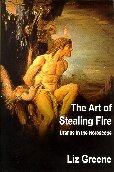
THE ART OF STEALING FIRE: Uranus in the horoscope - Liz Greene, $40.00

Contents:

Part 1: Uranus in the natal chart:
Unconventionality & individuality
The mythology of Uranus

Uranian associations
Prometheus the Titan
Uranian suffering & the punishment of Prometheus
Promethian suffering & the individual
Ouranos the sky-god & the Pythagorean numbers
The castration of Ouranos
Uranus as Frankenstein
Alice Bailey & other Uranian pastimes
The kabalistic Uranus & ritual magic
Uranian control
Uranian fundamentalism
The Sun & Saturn as containers of Uranian energy
Modern applications of the Ouranos myth
Uranus & the Enlightenment
Uranus in the houses of the horoscope
Uranus in the 1st house
Uranus in the 2nd house
Uranus in the 3rd house
Uranus in the 4th house
Uranus in the 5th house
Uranus in the 6th house
Uranus in the 7th house
Uranus in the 8th house
Uranus in the 9th house
Uranus in the 10th house
Uranus in the 11th house
Uranus in the 12th house
Aspects of Uranus to the personal planets
An example chart
Bibliography

Part 2: The transits of Saturn & Uranus:
The meaning of transits

Transit cycles
Transits as teleology
Transits as psychological patterns
Transits as events
Orbs in transit
The meaning of the Saturn cycle:
Saturn & separation
Saturn as "lord of karma"
The stages of the first Saturn cycle
The stages of the second Saturn cycle
Final remarks about the Saturn cycle
Saturn-Neptune contacts
Too much Saturn?
Saturn's defense systems
Saturn transits to other planets
Transiting Saturn conjunct Venus
The meaning of the Uranus cycle:
Individual & collective
Uranus in the early twenties
Uranus in mid-life
Uranus in later life
The Uranus return
The combined cycles of Saturn & Uranus
The nature of events
Transits of Uranus to other planets
Example chart 1
Group charts & discussion
Example chart 2
Transiting Saturn conjunct the Sun
Transiting Saturn at the MC
Transiting Uranus over a grand fixed cross
The dark side of love
Venus in Aquarius
Example chart 3
Saturn transiting over a new moon
Transiting Uranus sextile a new moon
Example chart 4
Transiting Saturn square Saturn
Transiting Saturn conjunct Venus
Bibliography
About the Centre for Psychological Astrology
About the CPA Press

Comment: Part 1, Uranus in the natal chart, was given on January 20, 1996, at Regents College, London. Part 2, Transits of Saturn & Uranus, was given on February 17 of the same year, at the same location. To my surprise, both dates were Saturdays.

"Uranus as Prometheus" was previously developed by Richard Tarnas, though I do not know if the observation was original to him. Uranus is the Latinized spelling of Ouranos, which was the Greek word for sky. Wiki gives this explanation for the association of the planet with the name:

Following the discovery of a sixth planet in the 18th century, the name Uranus was chosen as the logical addition to the series: for Mars (Ares in Greek) was the son of Jupiter, Jupiter (Zeus) the son of Saturn, and Saturn (Cronus) the son of Uranus.
Teleology is the belief that everything has an ultimate purpose.

This was one of the first of the original CPA hardbacks to be reprinted in paper. We stock the paperback version, not the hardcover.

CPA Press, 277 pages.


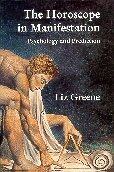
THE HOROSCOPE IN MANIFESTATION: Psychology & Prediction - Liz Greene, $40.00

Contents:

Part 1: Complexes & Projection:
The psychological model

Complexes & Greek myth
Early research: Charcot, Janet & Freud
The complex in Jung's analytical psychology
The application of the model
The archetypal level of complexes
Sun-Saturn as father complex
The possibility of change
Complexes in manifestation
The somatizing of the commplex
Complexes & psychosis
Freeing the energy of the complex
Hooks for the projection of complexes
Complexes & traumas
Other manifestations of the complex
Complexes & perception
Transits, progressions & timing
Complexes & karma
Complexes & unaspected planets
The theatre as a metaphor of complexes
The nature of projection
Projection as a natural process
The materializtion of the horoscope through projection
Events as symbols
The repetition of experience
The positive face of the complex
Complexes & chart configurations
Complexes & hard aspects
Complexes & element imbalances
Complexes & angular planets
Saturn & Chiron as complexes
The complex as a "supernatural" power
Example charts
Complexes in a relationship: Ellen & Franco
The dissolving of projections
A somatised complex: Ted's hayfever
Bibliography

Part 2: A psychological approach to transits & progressions:
Introduction: the nature of prediction
Levels of expression:

Meaning or teleology
Emotional stuff
Materization
When does an event occur?
The repetition of events
The triggering of complexes
Specific transits
Transiting Pluto & powerlessness
Pluto & betrayal
The unfolding process of successive events
The nature of individual identity
Transits & bodily memory
Differences between transits & progressions
Transits: the cosmos impinging on the individual
The symbolic nature of progressions
Example chart 1
Working with the progressed chart
Diurnal secondary progressions
Transiting Pluto opposite ascendant & Mars
Transiting Neptune conjunct the MC
Creating reality
Progressed new & full moons
The lunar phase at birth
Progressed lunations aspecting natal planets
Secondaries & solar arcs
The question of orbs
Applying & separating aspects in childhood
Transit cycles
Example chart 2
Transiting Neptune opposition the sun & moon
Progressed planets over natal Saturn & Pluto
Accidents & progressions & transits to Mars
Transiting Saturn opposition Neptune
The response of the client to prognosticative advice
More on applying & separating aspects
Progressed stations of planets
Example chart 3
Progressed moon over a natal T-cross
Bibliography

About the CPA
About the CPA Press

Comment: The first lecture, Complexes & projection, was given on 26 May, 1966, at Regent's College, London. The second, A Psychological Approach to Transits & Progressions, was given on June 8, the same year & location as the first. The first date was on a Sunday, the second on a Saturday.

I was going to give you the Wiki definition of complexes, but I quickly discovered the term to be a catch-all with almost no agreed-upon meaning. Other than as a general philosophical psychological orientation, perhaps.

Well, what about projection? Here is Wiki:

According to Sigmund Freud, projection is a psychological defense mechanism whereby one "projects" one's own undesirable thoughts, motivations, desires, and feelings onto someone else. It is a common process that every person uses to some degree.
This would make projection a form of externalization. This should be a fully conscious process for those with prominent oppositions in their chart. Which would make them excellent studies. It should be a compulsively unconscious process for those with prominent squares. It should be a minor problem, or, at worst, a silly habit, for most others. As to the nature of what is being externalized, or projected, look to the houses ruled by the planets in square or opposition.

Dick Nixon is a good case. (January 9, 1913, 9:35 pm, Yorba Linda, CA.) Nixon lied. Why did he lie? Because people lied to him. How was this manifested in his chart? In his Mercury-Jupiter-Sun/Capricorn - Neptune/Cancer; Mars/Sagittarius - Pluto/Gemini oppositions. From what I've read, Nixon knew exactly who was lying to him, and why. And, conversely, he also knew exactly, and how much, he lied back. Aren't oppositions fun? Is this in Greene's book? No. But it's probably a better exposition than hers.

Wiki defines Somatization disorder as a fancy word for hypochondria & just as quickly dismisses it & those who suffer from it as inconsequential. Greene uses the term to explain transits that manifest as physical ailments (pgs. 27-28) Greene's definition is superior.

CPA Press, 252 pages.


RELATIONSHIPS & HOW TO SURVIVE THEM - Liz Greene, $40.00

Contents:

Part 1: The composite chart:
The meaning of the composite chart

Technical matters
One plus one equals three
Relationship as an entity
Freedom & fate within relationship
"Inside" & "outside" teh relationship
Consciousness & orbs
An example: Sun-Uranus in the composite
Heimarmene
Working with the composite:
The zodiacal signs
Transits in the composite chart
The manifestation of a relationship
Synastry between the composite & the natal chart
Transits which trigger both composite & natal charts
Separations
The progressed composite chart
Progressed composite planets to composite planets
Progressed to other progressed composite planets
Progressed composite planets to individual natal planets
The progressed composite moon
An example:
Family inheritance in a composite
The purpose of a relationship
The emotional life of the relationship
Composite Moon in a yod
The "vocation" of the relationship
The meaning of the composite Sun
The meaning of the composite Saturn
The meaning of the composite Mars
Saturn's limits
Composite planets to the natal chart
Playing out the composite: the division of roles
Composite Mercury
The progressed composite
When does it begin?
Hard aspects in the composite
Composite nodes
A composite from the group
Pat & Phil
Composite Sun at the IC: settling down
Composite Sun square Pluto: they're out to get us
Composite Saturn conjunct Neptune: the quest for the ideal
Composite ascendant in Aquarius: an eccentric couple
Composite Moon in the 1st: playing to the audience
Bonds that endure
Composite Mars-Saturn aspects
Composite Uranus-Chiron aspects
The composite Sun in the houses
Composite Sun in the 7th
Composite Sun in the 10th
Composite Sun in the 8th
Plutonian composites
Composite Sun in the 1st
Composite Sun in the 6th
Bibliography
Appendix to Part 1
Charles' & Di's composite
Progressed composite for C & D, set for 31 August 1997
Transit chart for time of Diana's death
Charles' natal chart
Diana's natal chart, set for 7:45 pm
Charles' chart progressed for the time of Diana's death
Diana's chart progressed for the time of her death
Commentary
Part 2: The eternal triangle: The universality of triangles
Adult sexual triangles
Other kinds of triangles
The points of the triange
The betrayer, the betrayed & the instrument of betrayal
Types of triangle
The family triangle
Oedipus & other tales
Helpful Oedipal hints: Venus in the parental houses
Venusian rivalry
"Split anima" and "split animus"
Split families
Divided loyalties
Alienation from one's own sex
Saturn, Chiron & sexual insecurity
Midlife Oedipal antics
The unobtainable parent: astrological significators
Opposition between 4th & 10th
Triangles & society
Sexual exclusivity
Polygamy, Neptunian communes & other amusements
Triangles & sexual abuse
Mars & triangles
Power triangles
Pluto & power
Venus - Pluto: loving too much
An eye for an eye
Fear of intensity
Defensive triangles
Saturn & the repetition of rejection
The psychic "payoff" of rejection
Chiron's defenses
The convoluted psyche
The pursuit of the unobtainable
Neptune's triangles
The quest for perfect love
Uranian triangles
Triangles which involve unlived life
Connie: the betrayed
Uranian eruptions
Fathers & lovers
The Instrument of Betrayal
The scorpion & the centaur
The archetypal nature of betrayal
Repetition compulsion
Integration & forgiving
Close encounters of the Uranian kind
Parental significators as embodiments of unlived life
Weak or missing elements
Hard aspects
More charts from the group:
Luis: mother-love
A defensive triangle
Interlude: archetypal planetary dichotomies
More charts from the group
Catherine: the invisible rival
Bibliography

Comment: The first seminar, The Composite Chart, was given on April 27, 1997 at Regents College, London. The second seminar, The Eternal Triangle, was given on March 15, 1998, at the same location. Both dates were Sundays. CPA Press always publishes the date & location of the seminars, along with a tag-line, such as, part of the Summer Term of the seminar program of the Centre for Psychological Astrology (page 1). Which gives the impression that the CPA is part of an established university. Since all CPA seminars are given on Sundays (with a few on Saturdays), one gets the impression they merely rent a room for the day, with no other connection to their landlord.

I was looking to see if I could find how Ms Greene, in Part 2, gets from Oedipal to plain Jane adultery. From page 137:

Family triangles [ie, those involving parents & their children exclusively] have repercussions throughout life. They don't just happen in childhood. They keep repeating when they are unresolved, and they will usually find their way into adult relationships. [Here, "adult relationship" is defined to exclude one's own children.] When there is a repeating pattern of triangles in adult life, there is often an unhealed family triangle. Because it is unresolved, we recreate it, once or many times, hoping on some deep & inaccessible level that we will find a way to heal it.
Oedipal defined, from page 139:
Freud developed the ideal of the Oedipal triangle in a very specific context. In his view, we attach ourselves passionately to the parent of the opposite sex, and enter into a rivalry with the parent of the same sex. Depending on how the Oedipal triangle is resolved in childhood - and this includes the parents' responses as well as one's own innate temperament - our later relationships will inevitably be affected.
I will leave aside Greene's implication that we are all Oedipal, I will put that down to an inability to communicate clearly, or perhaps to her love of putting people down in general. But let us think for a moment about mamma's boys. Are they more likely to cheat on their wives than other guys, and when they do, is their infidelity qualitatively different from the more ordinary messing around?

I confess that I know very few married couples, and no mamma's boys at all. So I genuinely do not know. Astrologically, Mommie is represented by the 10th (or 4th), while girlfriends are 5th & wives are 7th. Astro-logic would define mamma's boys as having an interchange of rulers of 5th or 7th with 10th or 4th. (Mutual reception would be a powerful indicator.) Adultery would then happen when one or more of the relevant planets came under a stressful transit. But that's theory. Does anyone know?

CPA Press, 255 pages.


BARRIERS & BOUNDARIES: The horoscope & defences of the personality - Liz Greene, $40.00

Contents:

Part 1: The psychology of defences & their astrological significators:
Introduction
Psychoanalytic interpretations of defences
Defence mechanisms in the zodiac signs
Planets & planetary aspects as defence systems
An example chart
More example charts & group discussion
Chart sources
Bibliography

Part 2: Saturn & Chiron as defence mechanisms:
An overview of Saturn & Chiron
Saturn
Chiron
Example charts & group discussion

About the CPA
About the CPA Press

Comment: We start with page 6, Oral Defences

The earliest & most primal form of defence is the oral defence. Freud related this to early infancy & to that fundamental stage of experience in which everything in the baby's world is focused on feeding. The word "oral" is obvious. It is connected with mother's breast & with the life-giving nourishment that the breast provides. Freud understood the longing for the breast as a defence only if this initial life-urge becomes a mechanism of protection at a later stage of development for which it is no longer appropriate....

From page 10:
Even kissing can sometimes be an oral defence, because we are back at the breast. Now that may sound dreadfully unromantic, and kissing may obviously mean many other things as well. But the sleepy eroticism of a long kiss, like the sleepy eroticism of a delicious bar of creamy chocolate, may be linked with the infant's sleepy eroticism after a really good feed.... Our mouths, from infancy onward, are erotic organs, and eroticism and oral defensiveness go together....
This spurs the audience to ask, (pg. 10)
Audience: Could you explain a bit more about this link between eroticism & oral defences?

Liz: Babies are very sensual. Their feelings, as well as their bodies, respond to being touched & stroked. We must differentiate between sexual & erotic feelings. An infant's eroticism is not focused on penetration, nor does it reflect passion or attraction as we experience it between two individuals adults. Freud called infants "polymorphous perverse", which means that they respond to a wide variety of pleasurable erotic stimuli as passive recipients, regardless of the identity or nature of the stimulus. Infantile eroticism is really a state of physical and emotional fusion with the source of pleasure. Fusion on the emotional level is also a highly sensual and physically pleasurable experience. This unity of physical and emotional delight is one of the most striking aspects of eroticism, which differentiates it from the adult experience of purely physical release, and also from the adult enjoyment of close emotional exchange devoid of physical contact.

Suppose there is a man on trial for sexually molesting a six month old baby girl. Let's say he was caught stroking the baby's tiny genitals. In America, this is a crime for which he could be sent to prison for twenty years or more. But suppose he has a clever lawyer, and suppose the lawyer has a copy of this book. On page 230, he reads,
"About the CPA

Director: Liz Greene, Ph.D., D.F. Astrol. S. , Dip. Analyt. Psych."

The lawyer then calls this esteemed professor to testify as an expert witness. Has she not clearly said, in her own words, words she herself published, that not only could a baby not be harmed by such stroking, but that infants which are so stroked have a uniquely pleasurable experience, one denied to adults?

On the other hand, Greene has said nothing about genitals. Could it be that small babies can be molested (erotically "turned-on") merely by handling them? And is it not also clear that rocking them, cooing to them, blowing on them, are unsatisfactory ways of getting the little things to stop crying? Do babies, in Prof. Greene's opinion, only respond to touching and stroking, to eroticism? Do they respond to anything else?

But Liz Greene has no Ph.D. She is a fake. A fraud.

It is for precisely this reason the penalties for a falsely claiming academic achievements are so severe. I read words like those I quoted above, I want to strip Greene of every achievement (real or imagined) & run her out of town. She is worse than a nuisance. She is a danger.

CPA Press, 235 pages.


Some will ask why I am offering the book for sale. Frankly, I'd be happy if you gave both this book & Liz Greene a miss. There are plenty of good books, by honest authors (well, reasonably honest). I am using this brief review - I use all my reviews - to offer opinions, and, in some cases, hard analysis, for better or worse.


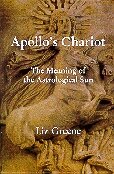
APOLLO'S CHARIOT: The meaning of the astrological sun - Liz Greene, $38.00

Contents:

Part 1: The meaning of the natal sun:
Introduction
Non-Greek solar dieties: Marduk, Buddha, Mithras
Apollo
An example chart
More example charts
When the sun doesn't shine
More solar themes
Bibliography

Part 2: The sun, creativity & vocation:
The sun & the creative process
The divine child
The sun at work
Charts from the group
The developing sun
Transits to the natal sun
The sun & vocation
Bibliography

About the CPA
About the CPA Press

Comment: With Greene's books I normally restrict my comments to the date & place the underlying lectures were given, but this stood out:

The plan for the day

I would like to start with the mythology of the Sun. Myth speaks to us on emotional & imaginative levels & extends oour minds beyond current thought structures. Myth portrays universal truths & fundamental human patterns which do not alter, and which stand outside the trends of any particular time. The human themes which myth describes are not confined to a particular way of looking at things at a particular juncture of history or in a particular kind of society. Myths are archetypal, timeless, and universal. They are free of political polemics. They arise from deep levels of the psyche that the ego cannot control, and no government legislation can eradicate their power, importance, and truth. (pg. 3)

Which is to say that in this book, and perhaps all her books, Liz Greene promises to tell you the truth, the whole truth, and nothing but the truth. I thought you might like to know.

Part One was given on November 1, 1998, at Regents College, London. The date was a Sunday, the Moon was in Leo.

Part Two was given one week later, on November 8, 1998, at Regents College, London. This was a Monday, the Moon was in Scorpio.

CPA Press, 321 pages.


DARK OF THE SOUL: Psychopathology in the Horoscope - Liz Greene, $45.00

Contents:

Part 1: The psychopath:
Introduction
The clinical picture
Was he or wasn't he: The "Oklahoma bomber"
Murder as a symbol: The head of "The Family"
The suffering of the soul
The psychopath as leader
The healer as destroyer
The moors murderess
What makes the difference?

Part 2: Sanity & madness:
All the world's mad but me & thee
Madness through the centuries
The madness of Dionysus
The madness of Aphrodite
The madness of Hera
The madness of Artemis
The madness of Uranus
The madness of Erinyes
The madness of Saturn
The madness of Zeus
Madness & the ego
Phobias
The suffering of the schizophrenic
Breakdowns & breakthroughs

Part 3: The Scapegoat:
Introduction
The myth of the scapegoat
The scapegoat as psychological complex
The astrology of the scapegoat
The religious leader as scapegoat
The importance of consciousness
The great American witch hunt
The parent as scapegoat & persecutor
A chart from the group

About the CPA
About the CPA Press

Comment: Part 1, The Psychopath, was given on July 1, 2001, at Regents College, London. The date was a Sunday, the moon was in Scorpio, enroute to a lunar eclipse four days later.

Part 2, Sanity & Madness, was given on June 25, 2000, at Regents College, London. The date was a Sunday, the moon was in Aries.

Part 3, The Scapegoat, was given on April 26, 1999, at Regents College, London. The date was a Monday, the moon was in Virgo.

CPA Press, 319 pages.


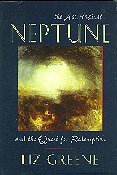
THE ASTROLOGICAL NEPTUNE & THE QUEST FOR REDEMPTION - Liz Greene, $34.95

Contents:

Chart
Acknowledgements
Introduction

Part 1: Fons et Origo: The mystery of Neptune
1. Creation
2. The pursuit of the millennium
3. The advent of the redeemer

Part 2: Hysteria Coninnctionis: The pyschology of Neptune
4. The discovery of the unconsciousness
5. The psychoanalytic Neptune
6. The Libestod

Part 3: Anima Mundi: Neptune & the collective
7. The esoteric Neptune
8. Neptune & glamour
9. The political Neptune
10. Neptune & the artist

Part 4: Ferculum Piscarium: The Neptune cookbook
11. Neptune in houses
12. Neptune in aspect
13. Neptune in synastry & the composite chart

Conclusion

Sources of birth data
Bibliography
Index
About the author

Comment: The tone is set from the very first words of the Introduction. They are:

The longing for redemption is an ancient, strange & many-headed daimon, which dwells within even the most earthbound & prosaic of souls. Sometimes eloquent and sometimes mute, this daimon aspires toward some dimly sensed union with an all-seeing, all-loving, ineffable Other, in whose encircling embrace may be found ultimate solace for the harsh limits of mortalityand the frightening isolation of individuality which lie embeded somewhere, albeit unconscious, in every life. Even if we do not call the Other by any divine name, but instead direct our devotion and our yearning toward unrecognized surrogages such as humanity en masse, family, nature, art, love, or the State, nevertheless this quest is unmistakable and not to be confused with the other, more individualized feelings such as desire, passion, love or admiration for a particular person or thing. The hallmarks of the longing for redemption are first, that it is a longing, second, that it is compulsive and absolute, and often collides violently with individual values; and, third, that its goal is not relationship, but rather, dissolution. (pg. xi)
By the late 19th century, symphonies had to be more than an hour in length. The only way to get them this long was to make the tempos slow, and start them off with gigantic introductions. Bruckner & Mahler come to mind. Things usually got more lively towards the end.

Speaking of endings, Greene ends her book with this:

It is not that Neptune is malevolent or malefic. Any malevolence attributed to the planet is the malevolence of human beings, blindly unleashing their yearning for a primal dream. We would all like to be redeemed, and we would all like someone else to do it for us. The client would like the astrologer to provide the redemption, and the astrologer would like to receive redemption from the practice of his or her art. We seek redemption from our therapists and counsellors, our doctors, our politicians, our families, our lovers and spouses, our children, and whatever we define as God. Neptune's greatest challenge is not whether redemption is possible, but whether we are prepared to take responsibility for our individual part in it without punishing somebody else. It may be, as Pluto leaves Scorpio and enters Sagittarius at last, that as a collective we are entering a critical period for the reevaluation of our religious and moral values. We may therefore expect obsession as well as soul-searching, and the urge to destroy as well as the urge to transform. In such a climate, not knowing what Neptune is doing within us guarantees some extremely unpleasant forms of social as well as personal upheaval in religious, moral, and legal spheres. Redemption may indeed be at hand. But if it is, on whatever level, and in whatever partial or complete form, what, we might ask ourselves, are we prepared to do to get it? And which of Neptune's many faces will we cast in the role of our redeemer, as the millennium comes to a close? (pg. 480)

Weiser, 506 pages.


THE OUTER PLANETS & THEIR CYCLES: The astrology of the collective - Liz Greene, $45.00

Contents:

Preface to the 2005 edition
Preface to the 1983 edition

Lecture 1: An introduction to the outer planets: Pre-millenarian anxiety; The cyclical nature of millenarian fantasies; The collective psyche; The meaning of Uranus; The meaning of Neptune; The meaning of Pluto

Lecture 2: Aspects to the outer planets: The meaning of Chiron; The discovery of the outer planets; Chiron's discovery & the rise of alternative medicine; Venus & Pluto; Sun & Neptune; Saturn & the outer planets; Idea & myth

Lecture 3: The outer planets in individual horoscopes: Adolf Hitler & the Pluto-Neptune conjunction; Karl Marx & the Uranus-Neptune conjunction; Vladimir Ilyitsch Lenin & the Uranus-Neptune square; Freud & Jung: Sun-Uranus & Sun-Neptune; The Uranus-Pluto conjunction of the 1960's

Lecture 4: Outer planet rulership of signs & houses: The question of orbs; Co-rulerships of Scorpio, Aquarius & Pisces; Houses ruled by the outer planets; Examples of strongly tenanted outer planet houses; House systems & parental houses; Jupiter & the outer planets; More on planets in the 12th house; The sexuality of the outer planets; Expressing the outer planets in creative form; The Jupiter-Saturn conjunction of 1980; The nature of national charts

Lecture 5: The USSR & the Uranus-Neptune conjunction: The transit of Pluto in Scorpio in the natal chart of the USSR; The transits of Saturn, Uranus & Neptune in Capricorn; The Capricorn conjunction in general terms; Religion & the conjunction in Capricorn; The great conjunction in the chart of the USA; Nations without birth charts

Lecture 6: Outer planets in everyday life: The outer planets in synastry; The outer planets in the midheaven; Relationships & the outer planets; Outer planets on the descendant; The outer planets & the elements; Cross-aspects between outer planets & Saturn

Lecture 7: The outer planets & the Astrological Ages: Mapping the astrological ages; Karma & the 12th house; The time of transition; Aquarius & the Promethean myth; Myths of the golden age & the fall

Appendix 1: The Generation gap: Outer planet configurations between parents & children; Generation games in the royal family; Making friends with the outer planets

Appendix 2: The good, the bad and the ugly: The Chiron-Pluto cycle: The components of the conjunction; Chiron-Pluto on the individual level; The peculiarities of the Chiron-Pluto cycle; The 20th century conjunction cycle; The Chiron-Pluto conjunction of the late 19th century; The millennium conjunction

Comment: This was first published in 1983 by Stephen Arroyo's CCRS, the reprint dates from 2005. To update the material, Greene has added extensive footnotes throughout, as well as two appendices, articles she originally published in Apollon: The Journal of Psychological Astrology in 2000 & 2001.

CPA Press, 250 pages.


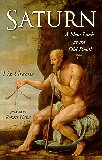
SATURN: A new look at an old devil - Liz Greene, $15.95
Contents: Introduction; In the water signs & houses; 2. In the earthy signs & houses; 3. In the airy signs & houses; 4. In the fiery signs & houses; 5. Aspects in the birth chart; 6. In synastry; 7. Conclusion.

Comment: This is the book that launched Liz Greene's literary career. Written shortly after she moved to London in the mid-1970's, first published in 1976. At which time the author's name, as shown on the front cover, was "Dr. Liz Greene." On the back cover she is still addressed as "Dr. Greene..." (as of October 18, 2007)

Weiser, 196 pages.


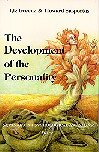
THE DEVELOPMENT OF THE PERSONALITY - Seminars in Psychological Astrology, vol. 1 - Liz Greene, $22.95
Dynamics of depth psychology at work in the birth chart. In four sections, the process & problems we encounter in the development of individual identity: Stages of Childhood, Parental Marriage, Subpersonalities; & Puer & Senex (the youth & the old man). Explore real life problems that readers can evaluate in their own lives. Contents: Stages of Childhood, by Sasportas; Parental Marriage in the Horoscope, by Greene; Subpersonalities & Psychological Conflicts, by Sasportas; Puer & Senex, by Greene.

Weiser, paper, 319 pages.


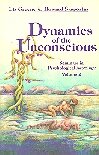
DYNAMICS OF THE UNCONSCIOUS, Seminars in Psychological Astrology, volume 2 - Liz Greene & Howard Sasportas, $29.95
Contents: Introduction
Part 1: The Astrology & Psychology of Agression, by Howard Sasportas
Part 2: Depression, by Liz Greene
Part 3: The Quest for the Sublime, by Howard Sasportas
Part 4: Alchemical Symbolism in the Horoscope, by Liz Greene
Suggested reading.

Comment: In later books they give the date & location of the seminars. Here they are a mystery.

Weiser, 367 pages.


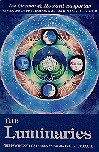
THE LUMINARIES - The Psychology of the Sun & Moon in the Horoscope (Seminars in Psychological Astrology, vol. 3) - Liz Greene & Howard Sasportas, $24.95
Weiser, paper, 243 pages.


RELATING: An Astrological Guide to Living with Others on a Small Planet - Liz Greene, $19.95
Contents: Language of the unconsciousness; Planetary map of individual potential; Air - Water - Earth - Fire: the psychological types; Beauty & the beast; The inner partner; The sex life of the psyche; Honor thy father & mother, with reservations; The infallible inner clock; Relating in the Aquarian age; Conclusion.

Weiser, paper, 294 pages.


ASTROLOGY FOR LOVERS - Liz Greene, $18.95
Contents: Part 1: Sun signs; Part 2: Table of ascendants; Part 3: Elements of Fire & Earth (Aries, Leo, Sagittarius, Taurus, Virgo & Capricorn); Part 4: The Elements of Air & Water (Gemini, Libra, Aquarius, Cancer, Scorpio & Pisces).

Weiser, paper, 357 pages.


Liz Greene & Friends, page 2

See also:

The Mythic Tarot, cards & book set by Juliet Sharman-Burke & Liz Greene. Illustrated by Tricia Newell.


The Astrology Center of America

207 Victory Lane, Bel Air, MD 21014
Tel: 410-638-7761; Fax:410-638-5154; Toll-free (orders only): 800-475-2272

Home Author Index Title Index Subject Index Vedic Books Tarot E-Mail: Dave


Established 1993, The Astrology Center of America is owned & operated by David Roell.
This entire site (AstroAmerica.com) is copyright 1996, 1997, 1998, 1999, 2000 by William R. Roell.
All rights reserved.