The Astrology Center of America, 207 Victory Lane, Bel Air, MD 21014
Tel: 410-638-7761; Fax:410-638-5154; Toll-free (orders only): 800-475-2272
Home Author Index Title Index Subject Index Vedic Books Tarot E-Mail: Dave


Astrological Houses, page 2


Houses, page 1


Indicates a book on our Top Ten list. If you would like to find more books like it, click on the star.

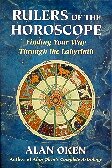
RULERS OF THE HOROSCOPE: Finding your way through the labyrinth - Alan Oken, $19.95

Contents:

List of example horoscopes
Acknowledgments
Foreword
Introduction

1. Peeling the onion:
Planets, signs, houses, aspects, qualities, elements, gender, summary

2. Planetary dispositors defined:
Hidden rulers revealed; Planetary mutual reception; Determining the relative strengths of planets in mutual reception; Effects of aspects between planets in mutual reception; Multiple mutual reception; Final dispositor; Planets as final dispositors in the natal chart.

3. House dispositors & planetary rulers:
Overview; Mutual reception by house; Linkages by same house rulership; Natural & natal house relationships; Strengths & weaknesses of planets when posited in their houses of honor or dishonor; Aspects between house rulers.

4. The ruler of the horoscope & its dispositor:
Determining the ruler of the natal chart; The sign on the ascendant & the delineation of the ruler; Intent & theme of the ascendant; Essential meaning of the ruling planet & its effects on the horoscope; Ruling planet by sign; Ruling planet by house; Ruling planets in the houses; Secondary dispositorship.

5. The ruler of the horoscope & its aspects:
When the ruler of the horoscope is a planet conjunct the ascendant; When the planet conjunct the ascendant is the ruler of the sign on the ascendant; Final dispositor & the planetary ruler; Assessing the affinities between ruler of the horoscope & its dispositor; Assessing the effects of other aspecting planets to the ruler of the horoscope.

6. Summary of rulership & planetary compatibilities:
Leo rising (Sun); Cancer rising (Moon); Gemini or Virgo rising (Mercury); Taurus or Libra rising (Venus); Aries or Scorpio rising (Mars); Aries rising (Mars); Scorpio rising (Mars); Scorpio rising (Pluto); Sagittarius rising (Jupiter); Capricorn rising (Saturn); Aquarius rising (Uranus); Pisces rising (Neptune).

7. The placement of the rulers in the astrological houses:
Summary of astrological keywords & phrases; The nature of the second house; The nature of the third house; The nature of the fourth house; The nature of the fifth house; The nature of the sixth house; The nature of the seventh house; The nature of the eighth house; The nature of the ninth house; The nature of the tenth house; The nature of the eleventh house; The nature of the tenth house.

Recommended reading list
Index

Comment This book tells how signs relate to each other by means of the planets that rule them. This is accomplished by an understanding of planetary dispositors. In other words, this sign is disposed by that planet in that sign. In other words, Venus in Scorpio can make a mess of Taurus. Oken does this part very well.

When he tries to add houses, he stumbles, as he does not have a clear understanding of them. Which surprised me, frankly, as I know how brilliant he is. He lists keywords for planets, signs & houses. His house keywords are sign-based, and excessively simplistic. Here are his keywords for the third:

The Houses - from a more Socially Evolved Perspective
... Third What I think & seek to communicate to others (pg. 193)
On the next page we have:
The Houses - from a More Traditional, Astrological Perspective
... Third method of communication, early education & environment, brothers & sisters, close friends (pg. 194)
Oken then proceeds to use the socially evolved perspective as if it was the only one. Here is the start of Ruler of the second in the third:
...the nature of one's self-worth or actual substance of value (money, for example) has to be communicated. The need to connect with people or with life situations that amplify one's opportunities is essential. Any planet found in the Third House is used to make connections. When it is the ruler of the Second, then such connections are sought that may increase the potential uses of one's personal talents & resources. If that planet is afflicted, then there is a limitation or difficulty with the connection-making process.... (pgs 196-7)
Yes, all of this is true, but, well, yes, houses two & three are more than this and, yet, less than this, too. Which means that Oken understands his socially evolved keywords, but, by what he does not say, seems not to understand those of the traditional astrological perspective.

In this book are a great many useful ideas & techniques that are grounded in astrological basics. Things you always knew but never knew what to do with, at least, not like this. Study of this book will be rewarding, up to the point where one grows frustrated with Oken's rather limited grasp of the houses, which undergirds his topic. At that point, this becomes the most excellent of all excellent books: One that forces you to go beyond what the author has written.

Ibis/Nicholas Hays/Weiser/Redwheel, 317 pages.


YOUR HIDDEN POWERS: Intercepted Signs & Retrograde Planets - Joan Wickenburg, $20.00
Contents:

To the reader

Intercepted Signs: Environment versus destiny

Introduction to intercepted signs
1. What's it all about? House systems
2. Getting started
3. Polarity of the signs
4. Rulerships & retrogrades
5. Duplicated signs or intercepted houses
6. Are you out of your element?
7. Planets (in intercepted signs)
8. Aspects & phases
9. Relocation charts
10. Transits & interceptions: Inner planets; Outer planets
11. Environment vs: destiny charts
12. Interceptions in review

Retrograde planets: Your hidden powers

Introduction to retrograde planets
13. How planets retrograde
14. The retrograde dilemma
15. Eight stages of cyclic unfoldment
16. The planets:

  • Mercury - Mercury's retrograde transit
  • Venus - Venus' retrograde transit
  • Trans-Earth planets
  • Mars - Mars' retrograde transit
  • Jupiter
  • Saturn
  • Collective planets
  • Uranus
  • Neptune
  • Pluto - Retrograde transit of trans-personal planets
  • Progressions
Conclusion

Appendix: Retrograde ephemeris, 1920-1999

Comment: December, 2008: A customer brought this book to my attention a few days ago. Here are my notes on intercepted signs:

My view of intercepted signs is that they are house-based. You have one way of dealing with the house from the sign on the cusp. But for unclear reasons this doesn't work all that well & so, perhaps in your teens or early 20's, you found a work-around, by means of the sign intercepted inside that house. You are then unaware you have two different ways of dealing with matters of that pair of houses.

Wickenburg is grasping:

However, when signs are intercepted, instead of providing constructive feedback and encouraging you to investigate the needs of your intercepted signs ... to delve more deeply into the experiences available through your intercepted signs ... to uncover the hidden potentials they define ... the environment challenges you to move on to the next obvious step in life (the experiences of the next house). The environment simply does not see, or understand, the degree of complexity involved with finding fulfillment in the areas of life shown by the houses containing intercepted signs. Due to lack of encouragement, feedback or role models offered by the outside world, the needs of these signs are often hidden until later in life when some crisis (brought on by transits) brings them to the surface. The needs & potentials of intercepted signs, and the powers of intercepted planets, are sometimes delayed in expression because of lack of external stimuli." - (pg. 18, emphasis & ellipses in original.)
This is a nice idea, but only half thought through. She's saying that a house with an intercepted sign inside it won't work all that well, and I agree. She then says affairs of this house will be ignored, and here I disagree. There are only twelve houses. Intercepted signs come in pairs. One of them might possibly be ignored. One of them cannot be. All you need do is consider the six possible pairs. 1 & 7 ? Try to ignore the first!

It may be that one is unaware of the difficulties with the intercepted sign until it is touched off by some transit, but it may also be the intercepted sign is a long-running sore that never quite goes away. I do not think that resolution of this problem waits until one is 50 or 60. The problem is solved much earlier, but awareness of that solution may not come until much, much later.

In my case, Libra & Aries, in houses 5 & 11, are intercepted. Saturn sits in Libra, Jupiter in Aries. I was aware of 5th house problems, I was aware of a Saturnian influence in it, before I was 15. (Decades before I knew anything about Saturn or astrology.) My first efforts to work with the sign on the cusp of 5, Virgo, did not happen until I was in my 40's. I did not become aware of the true situation, ie, the dual nature of the house, until my 50's. I have still not figured out what is going on with Aries in 11.

Wickenburg's notes on intercepted houses (pgs. 52 - 58) are theoretical. In theory, houses with the same signs on them would be linked in some fashion, but we need to find the ruling planet & note the house & sign it is in, as well as any tight aspects it may have. Robert Blaschke has tightly linked 2nd & 3rd houses, by means of dispositors in mutual reception (his chart is published), which, for him, means the harder he works (3rd house) the more money he makes (2nd). (Read his book on the self-employed astrologer.) I have the same signs on 2 & 3 (Cancer), but I am not so driven (3rd), nor do I get rewarded (2nd) when I am. In my case, the ruler, the Moon, is in opposition to the Sun, which disposes it. The polarity between the Sun's house & the Moon's house, fueled by the luminaries themselves, dominates the entire chart.

Wickenburg's retrograde theory is that the first of the two signs a planet rules is its primary. The second is its "retrograde" position. Mercury is naturally Gemini. When it is retrograde, it functions more like Virgo. Saturn is just fine as far as Capricorn is concerned, but if you have it retrogarde, you have to deal with Aquarian issues. Uranus, when direct, functions like Aquarius. When retrograde, like Capricorn. (Would this not make Uranus the higher octave of Saturn?) Direct Neptune is Piscean, retrograde, Sagittarian. Direct Pluto is Scorpionic. Retrograde, Pluto functions in an Aries fashion. This is a novel theory.

The author covers the eight stages of retrograde. Which are:

1. Solar conjunction (superior) to retrograde zone
2. Pre-retrograde to retrograde station
3. Retrograde station
4. First half of retrograde phase
5. The solar opposition or (Mercury/Venus) inferior conjunction
6. Second half of retrograde phase
7. Stationary direct
8. Stationary direct to solar (superior) conjunction
(pg. 131)
Wickenburg's writing on the various planets when retrograde is quite good, and almost completely free of mythical references, which I found a welcome relief. The retrograde appendix gives the dates/locations the planets enter their retrograde zone (ie, area of the sky they are about to back over), the dates/locations of the retrograde station, the solar conjunction/opposition, the date the planet goes direct, and the dates/locations the planets left the retrograde zone. All of which will help you to focus more clearly on retrogrades.

AFA, 223 pages, paper.


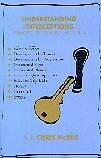
UNDERSTANDING INTERCEPTIONS, A Key to Unlocking the Door - I.I. Chris McRae, $22.00
Interceptions are what happens when you have the same sign of the zodiac on two house cusps, and elsewhere in the chart, two opposing signs missing. The further your birth from the equator, the more common this becomes. This excellent new book examines this in detail. Contents: Value & effect of interceptions; Effect of house systems; How much of the chart is affected; Effect on signs, Strength of ruler; Interceptions developed by transit & progression; Interpretation of intercepted (missing) signs in pairs (eg, Aries/Libra, Taurus/Scorpio, etc); Interpretation of repeated signs, in pairs; Intercepted planets; Elements (air, fire, water, earth) & modes (cardinal, fixed, mutable); Horary & electional applications. 206 pages including bibliography. AFA, paper.


FROM ONE HOUSE TO ANOTHER - Sophia Mason, $11.95
Contents:

Introduction
First house
Second house
Third house
Fourth house
Fifth house
Sixth house
Seventh house
Eighth house
Ninth house
Tenth house
Eleventh house
Twelfth house
Sample charts

Comment: From the introduction: "New astrologers often anticipate a certain transiting aspect to a natal planet, only to have it pass without any noticeable effect. Then, after a few days or weeks have passed, favorable news is heard regarding a family member or friend. If the individual were to reexamine the natal chart and correctly apply the transiting aspect to its proper house, it would be viewed with a different perspective."

This book tell how transits to your natal houses effect those in your environment. Ie, synastric use of transiting planets in houses. If you never thought to ask yourself this, well, maybe you should. The introduction continues:

There are no explanations as to why natal & transiting planets are able to reveal the affairs of others through one's own horoscope; we know only that it works with amazing accuracy.

The slower moving planets (Jupiter, Saturn, Uranus, Neptune & Pluto) are more apt to influence the affairs of others, than are the faster planets. This is due to the many aspects that the slower planets are likely to receive during their prolonged stay in one house. Using transiting Neptune in Sagittarius as an example, suppose it were transiting through your second house of money. To a certain extent Neptune will have an illusive effect on finances during its fourteen year stay in 5the second house. On the negative side, you must guard against possible theft, deception, confusion & being easily led or influenced financially. On the positive side, Neptune will introduce a new and unique way of earning money. You may, for one reason or another, have to keep personal finances a secret.

To determine the illusive energy of Neptune's affect on the rest of the chart:

First, determine which individuals are governed by each house. Second, find the section of each chapter entitled, "Your second house is their..." and read it from the perspective of the individual in question.

For example, after reading the ninth house section, one notes that in-laws and grandchildren are listed. Your second house is their sixth house of health & work. It is possible that Neptune's stay in your second house will bring into view an illusion that is difficult to diagnose or a hospital stay for either or perhaps both of these individuals. (pgs. vii-viii)

Which makes this book an example of chart-turning, for those of you who use that technique. AFA, paper, 74 pages.


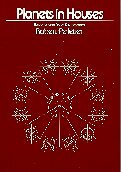
PLANETS IN HOUSES, Experiencing Your Environment - Robert Pelletier, $19.95
Contents:

Foreword, by Michael Munkasey
Introduction

First house
Second house
Third house
Fourth house
Fifth house
Sixth house
Seventh house
Eighth house
Ninth house
Tenth house
Eleventh house
Twelfth house

Appendix: Thoughts on the use of house systems, by Michael Munkasey

Comment: From the back cover: "He discusses the meaning of each planet in each house as derived by counting from each of the other eleven houses, and he discusses the meaning of each house position in relation to the other houses with which it forms trines, sextiles, squares and oppositions, inconjuncts and sextiles. In each chapter, wheel symbols graphically show the seventeen different house relationships delineated for each planet. Finally, Pelletier delineates the Sun-Moon polarities in terms of the wheel of houses....The introductory material includes a discussion of such topics as hemispheres and quadrants, empty houses, planets transiting houses, the planetary ruler of the sign on the cusp of a house, direct and retrograde planets in houses, and the meaning of houses in circumstances, character and purpose in life."

I am trying, again, to understand this book. Here is the author's explanation of how houses work:

The ruler of the house - the planet ruling the sign on the house cusp - has authority over the affairs of that house, whether the house is empty or occupied, and is an active extension on those affairs. Since each planet rules one or two houses, the affairs of the ruled house are necessarily implicated in the affairs of the house occupied by the planets. If a planet is not in the house it rules, it must adapt to the circumstances of the house it is in, which modifies what it can do. For example, if the Sun is in the twelfth house, the solar energy is modified, and the individual must make certain adjustments in his or her self-expression. If the Sun is the ruler of the seventh house, then a person's self-expression relates to the welfare of others.

The more planets that there are in one house, the more complex are the circumstances. On the other hand, when there are no planets in a house, the circumstances represented by that house require less direct attention than the areas of activity indicated by the houses that do contain planets. The affairs of the unoccupied houses are woven into those of the occupied houses through the planets ruling the empty houses. Any activity that relates to an unoccupied house is integrated into the activity of the house in which the ruler is located. (pg. 4)

In my view, this is backwards, and muddled as well. Which is why I never understood the book, and maybe why nobody else ever has, either. The first problem is that planets do not rule houses, they rule signs. This is fundamental. A planet does not adapt to the house it is in, as much as it dominates the house(s) that bear the sign(s) which it rules. It dominates by means of the sign (primary) and house (secondary) in which the ruler is placed. By means of its rulership, it displaces whatever planets may be in the house(s) it rules. (Which, of course, find themselves occupied with the signs/houses which they rule.) In the case of stelliums, the affairs of the houses ruled by the stellium are dominated by the sign (primary) and house (secondary) where the rulers are located. Which is why stelliums are so powerful. Most of the chart can find itself wrapped into a single house. That can be intense.

In Pelletier's example, if the Sun is in the 12th & ruling the 7th, the seventh house has Leo on the cusp, which puts the Sun in Capricorn in 12. If this is a female nativity, her husband (or partner) works (Capricorn) quietly behind the scenes (12th), as the Sun in a female chart represents the men in her life. If it is a male nativity, his domineering (Leo) wife (7th house) must put up with his own self-imposed obscurity (12th) & the work (Capricorn) which he finds there. Perhaps she rescues him from institutional life, or maybe she joins him there. (Let keywords be your guide. Shuffle them about until they make a story.)

But you want to hear it from Pelletier. So be it. From Seventh House Sequence: Pluto:

2nd to the 6th: You generally know how to convince people of your skills, and you have the promotional ability to win their patronage for your services. But remember that without customers, you're out of business, so be sure to give them everything they pay for. (pg. 206)
Huh?

Whitford, 366 pages, paper.


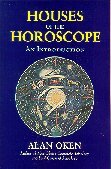
HOUSES OF THE HOROSCOPE, An Introduction - Alan Oken, $16.95
From the back cover: "Your horoscope is an illustration of the what, how, and where of your life. The "what" is represented by the planets, the "how" by the energy of the planets, the "where" by the astrological houses where, in which sphere of our lives, these cosmic energies land." Contents: What are the houses of the horoscope?; A house divided; The name, address, and quality of a house; Each of the twelve houses - signs on the cusp, planets in the house, astrological factors, people, places and things; The secondary meanings of the houses. 207 pages including reference guide. Crossing Press, paper.


Houses, page 1


The Astrology Center of America

207 Victory Lane, Bel Air, MD 21014
Tel: 410-638-7761; Fax:410-638-5154; Toll-free (orders only): 800-475-2272

Home Author Index Title Index Subject Index Vedic Books Tarot E-Mail: Dave


Established 1993, The Astrology Center of America is owned & operated by David Roell.
This entire site (AstroAmerica.com) is copyright 1996, 1997, 1998, 1999, 2000 by William R. Roell.
All rights reserved.