The Life, Death and Life of Wolfgang Mozart
This is Constanza Mozart, in 1802
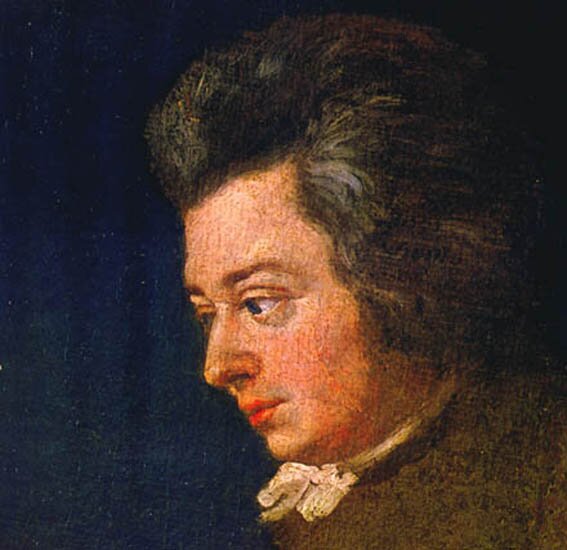
This is Constanza's first husband, Wolfgang Mozart, in 1782
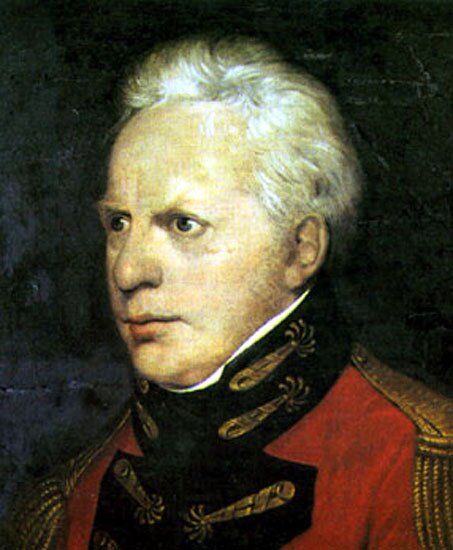
This is Constanza's second husband, Georg Nikolaus Nissen, in 1809
The Death of Mozart.
It is commonly believed that Mozart died, in Vienna, on December 5, 1791, a few weeks shy of his 36th birthday. In support of this are the following facts:
Additionally, Mozart died a friendless pauper. His body was taken to a mass grave the very next day & most likely covered in quicklime, like the rest of Vienna's poor. No one saw him buried, not even his wife.
- Mozart's body disappeared within hours.
- There were no medical records.
- The signed medical examiner's report was contradicted by eyewitnesses, and therefore ignored.
- Eyewitness reports, of which there seem to be many, are themselves so contradictory that no known medical condition has yet been found to account for them. Not in 200 years, and despite the most modern medical research & diagnosis. See the discussion here.
But let's have another look. Mozart had that year alone (1791) staged two successful operas & given numerous other concerts. Imagine Andrew Lloyd Weber opening not one, but two new musicals in London's West End in the same year. Or Stephen Sondheim doing the same on Broadway in New York. At his death, Mozart was neither obscure, nor broke. He very likely died with receipts still owed him.
Vienna's medical examiner said Mozart died of "acute miliary fever", and further stated that he had examined the body itself. Acute miliary fever is tuberculosis. This contradicts all first-hand accounts and so is ignored or fudged by Mozart scholars. They pretend that we can no longer know what was meant by "acute", "miliary", or "fever", that medicine was primitive & its terms vague.
To the contrary. Acute can have only limited meaning: Rapid, or intense. Miliary is that which is similar to millet, which is a tiny brown seed. Fever is an elevated body temperature. Miliary is specifically applied to tubercular-type diseases, of which tuberculosis of the lungs is by far the most common. There is no ambiguity. Moreover, every sniffle & sneeze of the infant Mozart has been brought out of the dark ages of medical superstition into the bright light of modern medicine, and this often from mere casual reports. Mozart's biographers have willfully ignored his final medical report.
When discrepancies exist between the medical examiner's report and those of eyewitnesses, when those eyewitnesses are themselves inconsistent, when no independent medical records survive, and finally, when the body itself disappears, we have a case of SUSPICIOUS DEATH.
_________________________________________________________ That Mozart's death was faked is not hard to puzzle out. No body, no cause of death are two big clues. The best guess, after nearly 220 years of study, is that Mozart died of Bright's Disease. Dr. Bright published a study of the disease in 1827 & thereby attached his name to it, but it was known far earlier. Know this:
Bright's Disease is not fatal. Sufferers commonly live into their 60's, the actor Sydney Greenstreet among them.
Bright's Disease was not unknown. In 1658 - more than a century before - Nicholas Culpeper's widow (he of the famous Herbal) published his treatise on Urinalia. In it, he wrote:
Which, as Culpeper goes on to explain, can have life-threatening consequences. Culpeper suggested blood-letting, but if that failed, then,If a vein chance to break in the bladder, as sometimes happens, then the blood that falls out of it into the bladder thickens and curdles.Bright's Disease had a cure. Culpeper:
I myself publish this book. The material quoted above is from pgs. 175-176. Amazon will be happy to sell you a copy.If the clotted blood stops the passage of the urine, you must bring out the urine with a syringe....What does Culpeper mean by "syringe"? He presumably means a long, thin tube of metal, presumably copper, inserted in the penis (in Mozart's case), running into the bladder. Such was known to 17th century English doctors. It was doubtless known to 18th century Viennese doctors. Sound like fun to you? No. But if it was the difference between life & death, I'd do it. I'm grateful I don't have to.
So much for Bright's Disease, and all the other futile guesses. Among them, Mozart died of bad pork. Mozart died of acute tooth decay. Mozart died of strep throat, Mozart died of this, or Mozart died of that. This absurd game of Clue has gone on far too long.
_________________________________________________________ Alleged events of that night, 4-5 December, 1791, are not hard to demolish.
The story goes that after her husband died, Constanze Mozart (nee Weber) flagged down the public hearse, as - allegedly - the Mozarts had no money for a proper funeral.
Regrettably, flagging down the public hearse was impossible, for her, or for that matter, any other citizen of the city. Regardless of income, or necessity, or even desire.
In Vienna, and, I presume, many other cities, hearses ran only after dark so as not to disturb the citizens. Vienna's public hearse serviced only the local police precincts. There, they picked up the bodies of vagrants who had died the previous day. These deceased individuals were unknown in the city. They had no friends, no next of kin, and, crucially, no parish affiliation. It was the city's job to dispose of such unclaimed remains, and the public hearse, and public cemetery, were the means by which it did.
All the citizens of the city of Vienna, along with their relatives, guests and hangers-on, were members of one parish or another. Rich and poor. Even non-believers & Freemasons. The city of Vienna, like all other medieval cities (as this was a medieval custom that was still in use) was divided into parishes, which accounted for every single house in the city. Should you have a birth in your house, you contacted your local parish, and a priest came to baptize the child. In her lifetime, Constanze Mozart bore six children. She knew the procedure.
And at the time of her husband's "death", she had already buried four of them. When there was a death in the house, you again went to your local parish church. In most cases, the parish was expecting the visit, as you had previously called them out for Last Rites. Now you came with news of death itself.
Whereupon the next evening, the parish sent its own hearse. Each parish had its own hearse, though I presume the smaller, or poorer parishes may have shared one. The parish hearse collected the body, took it to the parish church, where it was dressed & placed in a waiting coffin. Early the next morning, grave diggers prepared a plot in the parish cemetery, and at some point before sunset, there was a funeral Mass & the body interred.
Such is how death was handled in Vienna. Even for the poor. There were no exceptions.
Like as not, the parish undertakers who came to your home were men you actually knew. Members of your parish. The same men who had come to the homes of your friends, to take away the bodies of their fathers or mothers. You may not have liked them (well, who would?), but they were not strangers.
The men on the public hearse were different. You never saw them. Like as not, you rarely ever caught a glimpse of the public hearse itself. If, some dark evening, you should run out into the street and find it, and if, by chance, you had a death in the house, and if you asked them to remove the body, they would have refused. At best, they would have presumed you to be new in the city (from the country, perhaps) and unfamiliar with its ways. At worst, they would have laughed at you. They would not have set foot in a private house. Not yours. Not mine. Not Mozart's. Not for money, not for drink, not for sex with cheap whores. It simply was not done. Anyone who claims otherwise must show even one other case where it was alleged the public hearse picked up the body of a known citizen.
Now does the story of Mozart's death sound fishy? Wait. There's more.
Mozart, who was alleged to have been ailing for weeks, or maybe it was days, or, at any rate, for at least a good hour or two, should have received Last Rites. Also known as Extreme Unction. One of the Seven Sacraments. Usually given along with a Last Confession, final penance and a last Holy Communion. Without this care and attention, your soul might well be lost to an eternity of hell. For this reason, until the priest arrived, deathbeds were scenes of absolute panic.
So you will be relieved to know that, according to both Constanze, and her sister Sophie, Mozart received last rites.
You will be puzzled to learn that Constanze's second husband, the Danish diplomat Georg Nicholas Nissen, a man who was not present, a man who was not even in Vienna at the time, in the very last year of his own life, emphatically stated that Mozart did not receive last rites.
Deliberately, and in writing, contradicting the written account of his own wife, an eye-witness.
Wiki has the story. Read it here. As recounted by Wiki, the story is both clownish and absurd. Whether or not there were "bells rung" (and they were to be rung for good reason, but that's a dive into metaphysics that doesn't belong here), biographers seem unaware the parish itself - in this case, the bishopric of St. Stephens - kept its own records. A priest did not administer Last Rites without making a written note of it. These records presumably still exist.
Why do the stories not match? Because Constanze & "Nicholas" had conflicting purposes. Constanze had to show that she had been a good wife & had done her duty in the last hours of Mozart's life. If events weren't exactly like that, well, she was fibbing. She would go to confession & admit it. Common lies are venal sins, they are no big deal.
Nissen, whom I believe to be Mozart's post-1791 alias, was trapped. He could not lie that he had received Last Rites, and then go to confession & admit it. He would be admitting he lied about the affairs of a priest, in relation to himself. He would then be asking a priest to forgive that lie. Which no priest can, or will, do, as it is a fundamental breach of confidence. You cannot lie about a priest, and then expect a priest's trust. In catechism classes, in preparation for First Communion, we are taught, it is drilled into our heads, that forgiveness of sins is a grace. It done at the discretion of the individual priest. It is never something to take lightly.
Then we consider the further actions of his widow, Constanze, in the days & weeks after Mozart's death. If he's really dead, she will behave as a grieving widow. If he's not, she will behave in a radically different manner. Did you know that Constanze did not attend her husband's funeral?
This is my third attempt to describe Mozart's faked death. The difficulty has not been that his death was faked - as it clearly was - but who, precisely, was doing the faking.
_________________________________________________________ For some years I had the understandable belief that if Mozart's death was faked, that Mozart himself must have been the one who faked it. Presumably he was under duress. In support of this are wild rumors that Mozart bought or stole most or all the compositions attributed to him & so was in increasing legal difficulties. (See Robert Newman & Giorgio Taboga for details.) Or perhaps it was a string of wildly popular, yet obscene & politically offensive operas (Cosi Fan Tutti, The Marriage of Figaro, Don Giovani, The Magic Flute) that had earned Mozart the ire of the local authorities. Or maybe it was one too many adulteries with the wrong man's wife. Whatever the reason, there was a need for escape and a new start, or so I presumed.
But though it was easy enough to find Mozart's new alias & trace his subsequent life, I was never quite able to convince myself that Mozart faked his own death. Aside from a new name, Mozart seemed to make no effort to hide himself. If he did not fake his death in order to hide or flee, then why did he fake it at all? Efforts to explain this contradiction were unconvincing.
I stumbled across the actual sequence of events while contemplating the fate of Marie Antoinette. She & her husband, Louis XVI, were more or less usurped in the fall of 1789, and found their freedom increasingly restricted as the months & years passed & the situation in Paris grew ever more dangerously out of control.
As a result, all the crowned heads in Europe took note. Transport the King & Queen of France out of Versailles, to the Tuileries, against their will? European royals had never seen anything like it. When Louis & his queen suffered even worse, the kings, queens & monarchs of Europe began to fear for their own safety. In this regard, please note: Marie Antoinette was not French.
Marie Antoinette was the youngest daughter of Maria Theresa (1717-80), the most powerful monarch Austria ever had. In 1789, when the French Revolution started, Marie's eldest brother, Joseph II, was Holy Roman Emperor, ie, the king of Austria. (Reigned, 1765-90.) Up to 1789, he was largely a foppish ruler, having permitted the moral decay that lead to Mozart's operas. I suspect Vienna in the 1780's to have been similar to Weimar Berlin of the 1920's.
The events of 14 July 1789, the storming of the Bastille, was a wake-up call. Both Joseph, and his successor, his brother, Leopold II (reigned 1790-2), set about in a panic to clean up Vienna. In typical Viennese fashion.
Fearing a public outcry - which might easily lead to a public revolt, as was by then well-underway in Paris, Vienna quietly "encouraged" the worst of the miscreants to leave town. Lorenzo da Ponte, one of Mozart's librettists, fled. He ended up in America & is buried in Brooklyn. Exactly why he left town has been - up to now - somewhat mysterious. Doubtless research will find others who mysteriously left about the same time.
As one of the major instigators of Vienna's moral depravity, as well as being suspected of being a petty thief, Mozart was a prime target. But Mozart had long had his way with the courts of Europe, entering & leaving them at will. He, like many in Vienna as well as Paris (Marie herself among them), thought the troubles would pass. When pressure, in the form of not-so-subtle-hints, came to bear in late 1790 or early 1791, Mozart responded with a vast number of concerts, new compositions, operas & more. Not only was he going to tough it out, he was openly declaring he was bigger than the authorities. Push him out of Vienna? He would only make a big noise elsewhere. In Prague. In Berlin. In London. All places he had been before. They might as well let him stay.
But as far as the authorities were concerned, Mozart's continued presence in the city was far too dangerous to contemplate. So they came up with a plan. It was an inspired idea.
Mozart was a composer. What if Mozart was to be "poisoned"? He would then shortly "die". Why not commission him to write his own funeral music in the time he had remaining?
Mozart was happy to accept the commission, but rumors of poisioning alarmed him. Fearing there really was a plot against his life, he did not consult his usual doctor, fearing the doctor was part of the plot. The plot he feared went like this:
Instead, Mozart went anonymously to an unknown doctor. This doctor was unable to give him a definitive answer, but doubtless did give him the essentials of poisoning: That poisons work on various parts of the body (according to the specific poison), and, according to the poison, have known symptoms. Panic subsiding, Mozart realized he had none of the symptoms. So he remained in the city. He returned to his work. The city fathers did not, in fact, mean Mozart harm, but they were not above hoping a bit of fear would do their work for them.Doctor, doctor, I fear I have been poisoned!My dear Mozart, you have been poisoned! Quickly! You must drink this antidote, or you will die!
(Mozart drinks the "antidote", which is, in fact, a poison. And dies.)
Perhaps it was that Mozart was happy to take Vienna's money. Whatever else you may think of Mozart, he was not stupid. He quickly figured out the danger he was in. Modern research tells us the requiem was allegedly to honor the memory of a young woman who had died in February, 1791. Mozart received the commission in July. Such a commission would have been absurd. The woman's funeral Mass would have been within a day or two of her death. It would have had all the pomp & splendor her heirs could muster. Such a ceremony happens only once.
Kapelmeisters, which Mozart was not, commonly prepared funeral music in advance of eventual need. It was part of their job description. Kapelmeisters, or "Masters of Music", were employed by bishops, princes, & kings. When they, or any of their immediate family or entourage, passed away, the kapelmeister was required to have music ready to play the next morning. Purcell's famous Funeral Odes owe their origin to this grim necessity.
As Mozart had no such position, as there was no actual need for such music, it was easy for him to guess that he was writing his own funeral music, that when he finished, he would immediately be declared "dead" & his own music played to prove it.
Hence the reason Mozart stalled.
Stall, delay, drag his feet, just simply hang on long enough, and the French panic would blow over & life would return to normal.
Regrettably, no one told this to the mob in Paris, where conditions continued to deteriorate. June 21, 1791, the French Royals attempted to flee. They were quickly apprehended & returned to Paris. The failed attempt only emboldened the mob. On September 14, 1791, the new French Constitution ended the monarchy. The news was not well-received in Vienna.
In commissioning the Requiem, the city of Vienna thought it had set Mozart the ultimate trap. They were surprised & angered that he would gladly take their money, and then do nothing. That he would see through the poisoning scare. Bureaucrats are so often ignorant of the ways of the world. As the weeks passed, as summer turned into autumn, they became increasingly frantic & pestered Mozart for news. Mozart's indifference was a mistake.
At some point in the early fall of 1791, the city abandoned their commission and went elsewhere. There are various reports that some new work, some solemn piece of music was in fact played at Mozart's "funeral Mass". Where did this come from, and who might have composed it? Enter Salieri.
Antonio Salieri was a good, reliable composer, popular in Viennese court circles. Having set its sights on declaring Mozart dead, physically running him out of town, and then staging a phony funeral to seal Mozart's fate, the city needed music of some sort. It would seem that Salieri was called upon to supply it.
He probably took the commission much the same way that Mozart had taken his: As a foolish joke. He was quickly put under a great deal of pressure to produce something, anything, and as soon as possible. Like as not he was unaware of the motives behind his commission. He presumably completed the work in late November.
About that time, perhaps as a result of a casual conversation with Salieri himself, Mozart learned of Salieri's commission and, finally realizing the gravity of his situation, in shock & a blind panic, set about trying to avoid his fate. His days were spent in a frantic search to find someone, anyone, whom he could beg, cajole or bribe. In this, he was exceedingly discreet, that he not inadvertently make his situation worse. Upon returning home, he would spend his evenings in a feverish attack on his Requiem, until he collapsed, late at night, from nervous exhaustion. Sleepless, he would then stagger up at dawn the next day and do it all over again. This is not the best way of bribing anyone, or composing much of anything. He was trying to forestall what he now knew was inevitable: His forcible removal from Vienna. Reports are that by the evening of the 4th of December, he had worked himself into a state of complete exhaustion. He was, however, nowhere near death. He was, after all, still a healthy 35-year old.
On the night of December 4 - 5, with the funeral music it needed finally in hand, Vienna made its move.
Shortly after midnight, the public hearse, having completed its rounds for the night, stopped at the Mozart apartment. I imagine the men on the hearse to have been big, burly types, as such are suited for hauling bodies. They were under orders. They entered the Mozart apartment, they physically seized Mozart himself, and, over the screams of his wife & children, bundled him into the hearse & took him away, still very much alive.
They left behind a carefully prepared, completely official, signed Certificate of Death. The cause of death? Acute Miliary Fever, aka, tuberculosis. This document still exists. The single good thing that may be said of Mozart scholarship, is that this certificate has always been known to be a fake.
They put Mozart in the back of the hearse, with the night's dead bodies to keep him company. At Vienna's public cemetery, he was confined with the newly dead, terrified, until dawn, when he was released. He immediately fled for Prague.
At the Mozart apartment the next morning when the first callers arrived, the disheveled, distraught, sleepless, frantic & hysterical Constanze could greet them with,
In answer to the moronic, macabre question, the one that has been asked every day, from then to now, Was Mozart working on the Requiem at the time?, and if, perchance he was, Constanze could reply,My husband is dead. Here is the Death Certificate that proves it. He was taken in the night by the public hearse. The dog ran after him, I could not stop it. I presume he is with Wolfgang now, having a "pauper's funeral".In sum, every word of the traditional story is "true". Just not in the way we have always thought.He worked on it to the end.What was the night like for Mozart himself? It was similar to an execution. (Read Dostoyevsky, who was put through a mock execution.) It was the end of life as Mozart knew it. Nothing would ever be the same again. It changed him forever. The next day, enroute to Prague, I imagine he briefly had a false sense of cheer & confidence, but by evening he had broken down & wept, uncontrollably.
_________________________________________________________ Such is the true story of Mozart's death.
You may now understand why Constanze had no interest in attending her husband's "funeral Mass". She was frantic to learn of Mozart's fate, and enraged at the city who had stolen him from her. For his part, Salieri was shocked, and then enraged, when he learned the use to which his music was put. He disowned the music (perhaps destroyed it outright, as it does not seem to have survived) and went to his grave believing he "killed" Mozart. Lest you think the city could have found some other composer, consider that men of Salieri's talents are not plentiful. If he had refused, the city might have been stymied for months, if not forever. Which was, remember, Mozart's own opinion of the situation.
While Mozart may well have been a musical pariah, his sudden, forcible removal was a shabby affair that shocked the citizens of Vienna. As for the "posthumous" completion of the Requiem, was it really Sussmayr's work? Was Sussmayr actually Mozart's "student", or was he a hack the city hired to make good on its original commission? Could Mozart subsequently have dictated the completion to Sussmayr, since the "deceased" Mozart could hardly claim to have completed it himself? And, if so, would Sussmayr have insisted on adding his own flourishes as part of his price? These are questions which we can now, perhaps, answer.
So how do I know where Mozart went after his night among the corpses?
Simple. In January, 1792, the very next month, Constanze sent her eldest son, Carl, to Prague to stay with Franz Xaver Niemetscheck, a censor. He was 26, ten year's Mozart's junior, and a close friend. Supposedly Constanze sent Carl as Prague had better schools than Vienna, which is silly. Among Mozarteans, you will hear many such excuses. Prague was friendly to Mozart. Prague was the obvious place to go to find shelter, and a son was an obvious, and welcome, companion.
I speculate that in 1792, Mozart traveled to Italy, where he inspected the archives of one Andrea Luchesi, one-time Kapelmeister at Bonn, but this muddies Mozart's fake death with Mozart's compositions.
In 1793, Mozart returned to Vienna under the new name of Georg Nicholas Nissen, a Danish diplomat. He was allegedly the new First Consul, ie, ambassador. He was shortly thereafter discovered to be living in Constanze's flat. He was her companion for the rest of his life, but the two were not married until 1809, some sixteen years afterwards.
According to the Mozarteans, Nissen was born in Haderslev, Denmark, on January 22, 1761. Because young Nicholas was ambitious, and because his father was a poor parish priest (Denmark lets them marry), funds for his schooling were provided by his mother's brother, a prosperous merchant. In cases of fake identity, watch out for the "mother's brother", as this person is invariably an unrelated friend whose only job is to confirm the alias in cases of emergency. I initially presumed that in faking his new identity, Mozart would do the obvious & pick an individual who was already dead, dead as a child, so there would not be any unexpected surprises down the road.
This was not the case. To establish himself as a Danish diplomat - and put himself beyond the reach of Viennese authorities - Mozart based his new identity on an existing Danish diplomat of approximately the same name: Nicholas Nissen.
One fine day I entered "Nicholas Nissen" into Google, hoping to find more details of Mozart's alter-ego. I was stunned, amazed, and shocked when Google took me to an excerpt of Joseph Wheelan's new book, Jefferson's War, where I read the following, from Chapter 17, Full Circle. (The following is from 1807:)
Were there two Nicholas Nissens? Both Danish diplomats? Both serving in the first decade of the nineteenth century? One in Tripoli? One in Vienna?The long layover in Leghorn [Livorno, Italy] proved lucky in one respect. Davis happened to meet Nicholas Nissen there as former Danish consul to Tripoli on his way home. The consul's devotion to the Philadelphia captives during their nineteen months of imprisonment had been rewarded with a formal expression of gratitude from the US government and a silver urn purchased by the prisoners. Now Nissen was retiring from the diplomatic corps. He brought Davis up to date on Tripolitan affairs, including the peace treaty, which Davis had not seen. The treaty, he told Davis, contained a secret clause. Nissen knew it did because he had drafted it.As you may read in Mr. Wheelan's book, the real Nicholas Nissen was instrumental in resolving the war between the Barbary Pirates & the United States. Whereupon he retired & slowly made his way back home to Denmark. What he did there Mr. Wheelan does not say.
Judging by what happened to the other Nissen, in Vienna, in 1809, we may hazard some guesses.
In 1809, the Viennese Nissen, who had lived in sin with Mozart's widow for some 16 years, who had raised Mozart's two remaining children as his own (there is dispute if they called him "papa" or not), who had busied himself with Mozart's affairs (how, exactly did those piano concerti come to be published "posthumously"? Who was the editor who put solo score to orchestra?), who had not one single diplomatic achievement to his credit, suddenly marries Constanze. Suddenly sits for the portrait, shown above.
A portrait whose price, by the way, was far beyond the means of any mere composer. This technique of painting involves many thin washes of color, building layer upon layer. It is a delicate, lengthy, expensive process. The subject looks distinctly uncomfortable as well.
Early on, I showed both portraits to a friend. Look, he said, the noses are different. Might be the same chin, might be the same eyes, might be the same hairline, might be the same overall face, but look at the noses. And I did. And I thought about it.
During his generally accepted lifetime, Mozart would have sat for many portraits, both formal & informal. A sketch of his face would have been on marquees promoting upcoming concerts. But mysteriously, the only portraits, made during his lifetime, that still exist (the life that ended in 1791) show him as part of a group, usually part of his father's family.
Suppose the real Nissen got back to Copenhagen, say in 1808, and found his identity had been stolen. That there was a man in Vienna, claiming to be him, living with the Widow Mozart. Nissen's good name was at stake. He took the appropriate steps. He inquired who the man's "next of kin" was, was told of the "mother's brother" & quickly determined the truth of the matter. He was, after all, the best man for the job.
He presumably sought a portrait of the miscreant. Presumably Mozart was tipped off by friends in the Danish consulate - doubtless the same friends who had kept him safe from the Viennese authorities ever since his return in 1793. Presumably Mozart destroys what portraits he can, leaving only those he cannot touch because they are group portraits in the possession of his extended family.
In frustration, Nissen - the real one - commissioned an accredited artist to paint Mozart's picture, and ordered consulate staff in Vienna to make Mozart appear. As he claims to be a Danish diplomat, Mozart is compelled to obey. (If he flees, he instantly becomes a Viennese citizen, subject to the Viennese authorities.) So he sits for the portrait, one which cannot be retouched. And, in an effort to reaffirm his identity as the "real" Nissen, he marries - or rather, remarries - Constanze.
The finished portrait goes to Copenhagen. In 1812, Mozart traveled to Copenhagen, where, as a "retired diplomat", he was put to work as an ordinary censor. Such is the official story the Mozarteans believe. Nevermind that no diplomat would accept the lowly job of censor.
In reality, the real Nissen had the fake Nissen arrested, brought to Copenhagen, tried and then sentenced to house arrest & made to be a common censor. If so, it was a most delicious punishment. Danish is not an easy language to learn. The procedings should be part of Danish public record.
Mozart & Constanze stayed in Copenhagen from 1812 to 1820, when they returned to Austria. I was long puzzled as to how Mozart left his Danish imprisonment. I wondered if his sentence had ended, or if he escaped, or if the real Nissen had passed away, thus making his identity moot. Finally I realized I had the solution in front of me. It's on his gravestone: The King of Denmark pardoned him. This, also, should be part of Danish record. A guess would be frail health. In 1820, Mozart was 64.
_________________________________________________________ But he was to find no peace in his native land. The last six years were spent in Salzburg. This begins the final chapter in this sad man's life.
Vienna had taken his identity from him in December, 1791. With much work - and probably not a little cash under the table - he had manufactured a new identity. From his return to Vienna in 1793, to his departure for Copenhagen in 1812, whenever he was recognized & stopped in the streets of Vienna,
He could reply,Herr Mozart! Are you a ghost?! I heard you had passed on!But in Copenhagen his identity as Nissen was taken away, as it was never really his. What he was known as in Denmark I do not know. Quite possibly "Mozart", or a Danish variation of it.You are mistaken, my friend! I do not know this Mozart of whom you speak. I am Georg Nicholas Nissen, the Danish Counsul. Not a ghost!But when he returned to Salzburg in 1820, who was he?
Herr Schmidt?
He could no longer live in Vienna and claim to be Nissen, a Danish citizen, because if inquiries were made and if the Danes did not disown him outright, they could be relied upon to explain the exact circumstances. So he remained in Salzburg & hoped he would be quietly ignored. But whatever name he used, it was very important that he was not Mozart. The "Mozart", who had been declared dead 30 years before (as of December, 1821), was still, presumaby, subject to arrest & deportation. The city of Vienna, which was responsible for Mozart's faked "death", had no reason to presume that he was actually dead & every reason to worry that he might well return, very much alive. In having foolishly declared him dead, but not actually having made him so, Vienna was stuck just as much as Mozart was. The Danish interlude had only made matters worse. From 1820 onwards, both the city, and Mozart himself, lived in perpetual fear of a newspaper exclusive, "Mozart Lives!" Which not only could not be denied (Mozart no longer having any other identity he could claim), but which was common knowledge in many quarters.
It therefore became necessary to establish that "Mozart" really was dead. And though there was an official Certificate of Death, it didn't seem as if it, alone, was enough. Because one of the consequences of that December night in 1791 was a certain passive, yet cruel, streak in Mozart's personality, which is well-known to those who have suffered a similar experience, but hard to describe to those who have not. Since that horrible night long ago, self-preservation had long been his only goal in life. If it was at all possible, Constanze was even more single-minded.
The solution, the only one available, were first-person death-bed accounts. Constanze wrote one. Her sister wrote one. Several surviving friends each wrote one. Aside from Constanze, were any of them actually present on that fateful night? No. The household was far too frantic for guests. Truthful, historical, or even consistent accounts were no longer necessary. (Constanze's sister came up with the "helpful" observation that Last Rites would have been required. Which only made matters worse.) It has been noted that all of these date from the Salzburg period, and all were done at the request of "Nissen", who claimed to be writing a biography of "Mozart".
From the mid-1790's onward, Mozart had supported himself, in part, by publishing the compositions he had written, or acquired, over his long life. Now, to make the biography work (and thereby "prove" that he was really "dead" & give him the security he craved), he had to fit all these many works into his accredited life-span, which began on January 27, 1756, and which "ended", abruptly, on December 5, 1791. He was still working on it at the end of his life. This account has long been the foundation of Mozart's accepted biography. As we can now see, it is, without doubt, a desperate, albeit amusing, work of fiction.
The man known at one time as Georg Nikolaus Nissen, the man who was born Wolfgang Amadeus Mozart, a man who ultimately had no identity, died March 24, 1826, aged 70. He is buried next to his beloved wife, Constanze Weber (d. 1842), at St. Sebastien Friedhof, in Salzburg. Looking at the photos, I can feel the love they had for each other, still pouring out.
Mozart has a grave. You may visit it.
_________________________________________________________ Postscript:
There is increasing evidence that Mozart bought, stole, or faked many of his most famous compositions. Even during his alleged lifetime, there were many accusations against Mozart. In London, J.C. Bach accused Mozart of stealing his symphonies. And there is a long list of "spurious works attributed to W.A. Mozart", a part of which you can see here. These are invariably accounted as mere "accidents".
With the knowledge that Mozart lived to a ripe old age, we can re-examine the controversy afresh. Why do Mozart's four horn concerti sound like Punto's (1746-1803)? Maybe because they are. There are, in fact, five of Punto's concerti which are "lost". Have you ever heard Mozart's bassoon concerto? Did you know that Johann Nepomuk Hummel (1778-1837) wrote a carbon copy of it in 1805? There are other works, for violin & piano, which sound strangely like the music of Beethoven.
It is said that Mozart "anticipated" the styles of many later composers. Perhaps so. But it is interesting the styles he anticipated belonged to composers who lived & worked in towns & cities which Mozart, either before his "death", or after, lived in or visited. Notably Mozart did not "anticipate" the music of Boccherini, in Madrid, or John Field, in St. Petersburg, nor of Rossini, in Italy.
It is known that Mozart was continually begging for money, and it is also "known" that Mozart never seemed to have anything to show for it. If, as an eternally roving performer, he had to buy the compositions he played, that would account for much of the spending. Would, say, Beethoven sell his music to the disguised Mozart? (And if he did, Beethoven knew full well who the buyer was. "Mozart is dead" takes on a whole new meaning, does it not?)
Well, why not? A violin-piano sonata (listen to Mozart's 14th) is two or three days work. A publisher will pay a pittance on receipt, and then maybe a bit more in royalties. In a year or two. Maybe. If he's honest.
Mozart would pay cash money, and a lot of it. What he did with the music, that was his affair. In the life of every composer there come pretenders who will pay handsomely for what they can pass off as their own. Every composer makes his own decision if he will be a part of that. The ones who do not are, of couse, silent, as they have nothing to say. The ones who do are, of course, silent, as silence is a condition of sale. And there's good money to be made for that silence.
For his part, Mozart spent the years from 1793, to 1812, struggling to arrange his own comeback, his own re-emergence. When that glorious day dawned, he was going to need music. Good music. Regrettably, that day never arrived.
Mozart historians hate the very mention of theories such as this. Which is understandable, but not a scholarly response. I expect they will find my theory of his sudden death intensely disorienting, even though I have accounted for virtually every known detail (the faithful dog who saw him "buried"), and have invented nothing that cannot be clearly deduced from available evidence (Salieri's unwitting participation & subsequent remorse). I have incorporated a vast amount of evidence that had previously been ignored or misunderstood, and I have deciphered many heretofore unexplained mysteries. All of which sets my theory apart from all others. The result is shocking, and deeply tragic.
In the end, it might be that Mozart was not a "real" composer, but however he did it, he was able to assemble a vast collection of music. Much of it was above average in quality (remember that much of it is rarely played), and much of it would never have existed, or would not have survived, were it not for his singular efforts. It is a disgrace, a tragedy, that his best years were wasted. Mozart's phony death would have stark repercussions, most notably on Beethoven & his well-known suspicion of Viennese nobility. For his part, Beethoven all but ceased composing in 1812, the same year Mozart was transported to Copenhagen. Are these two events related? Was Mozart Beethoven's secret muse? One that could never be mentioned by name? Can anyone ever know?
Skeptics will ask, where is the proof? Mozart was a voluminous letter-writer. Surely if he was having problems with the city of Vienna, the summer of 1791, he would have mentioned it?
Surely he did, but when, in the 1820's, he had to justify his continued existence as "Nissen", not "Mozart", he had to destroy evidence to the contrary, lest it fall into unfriendly hands. Then, as now, the true story of Mozart's death was, frankly, explosive. Mozart had had more than enough of that kind of surprise. The same friends who were pressed for phony death-bed scenarios were also made to destroy the letters in their possession.
What about Beethoven? If Wolfgang & Ludwig were drinking buddies, surely some mention would have been made!?
Surely there was. Beethoven remarked on numerous occasions, "Mozart is dead!" Why do you suppose the death of a man, many years before, rankled so much? Because he was standing in front of him, literally, but Could Not Be Named. Not without risk of Mozart's arrest, and probably Beethoven's, as well. Vienna went to a lot of bother to get rid of Mozart. It did not want to see that effort wasted. Do we have here a cause & a partial explanation of Beethoven's famous ill-temper?
References to mysterious third parties can be found, if one looks closely. Here is but one example:
In the Biographical Notes of Franz Wegler & Ferdinand Ries (1838), one of the earliest biographical sketches of Ludwig van Beethoven, Ries remarks,
The phrase, stolen from me by a friend is most curious. Like the phrase, I am lying, it is logically absurd. Why was it "stolen", rather than "borrowed" or even, "given to"? Ries does not wish to say it was stolen by a thief, as it implies negligence on his part. Nor does he wish to say, gee, I misplaced it, or it got caught out in the rain or even it was lost in the mails. Any of which would have been easy enough, even if they weren't exactly true. Nor does he wish to omit mention altogether, which, as he had to be goaded (repeatedly) to write his notes, would have been even easier. The score was taken from him, and already, in 1838, he realizes its historic value. But if he says it was borrowed then he is obliged to tell us where it went. Who is this "friend"? Mozart, guilty or not, cannot be named, as by 1838 he has long been officially dead. (Before he died, Mozart himself had said so!) In insisting on an unwelcome truth Ries would merely be spitting in the wind, and in the process, discrediting the rest of his book. But he has told us something interesting, perhaps something vital. We are to puzzle it out as best we can. (Ries's book is full of such puzzles, as I am slowly discovering. I am coming to believe he was settling scores, but I am digressing.) I am not saying Ries's thief was Mozart, as I do not know. How many more such puzzles, from other contemporaries, up to now overlooked, are waiting to be found?There was something most striking about the Larghetto quasi andante of the Symphony in D [the Second Symphony] just mentioned; which Beethoven had presented to me in a score in his own hand, out of pure friendship (and which was unfortunately stolen from me by a friend).
(Titled, Beethoven Remembered, published by Great Ocean Publishers, 1987, pg. 66)_________________________________________________________ Mozart's "death", on December 5, 1791, may be summed up as follows:
In a nutshell, that is the true story of Mozart's death. Unlike all other theories, it alone can be proved. His remains rest in a marked grave. Exhume his bones, give them the same DNA test as was given a few years ago to the alleged skull. So often historians settle for the safety of the superficial. Mozart's many mysteries are not for the faint of heart.
- By late 1789 or early 1790, in a panicked reaction to the French Revolution, the city of Vienna compiled a list of undesirables, and quietly encouraged them to leave. Most did so, at the expense of their careers. Lorenzo da Ponte was one of the unlucky, there were doubtless many others.
- Mozart refused, believing the panic would pass.
- Increasingly fearing a Viennese revolution (how "real" this was no one today can know) and eager to head it off, the city hatched an elaborate plot to declare Mozart dead, physically remove him from the city, and then stage a fake funeral to make it official. In this, the city was ultimately successful.
- Although declared "dead" on December 5, 1791, Mozart lived. He eventually died 34 years later, on March 24, 1826, in Salzburg. He is buried next to his wife, Constanze.
When I consider how different my findings are from the accepted biographies, even I get a bit confused. I wonder if the general public will be too disoriented, if inertia will not overwhelm, if they will not find it easier to go back to the accepted mythology, that Mozart died in the Library by means of a Rope. Or perhaps it was in the Conservatory by means of a Candlestick. The truth being far too strange, how long can Mozart's very own game of Clue continue?
David R. Roell
July 24, 2009
Minor edits, August 25, 2009
Copyright 2006, 2009. All rights reserved