The Astrology Center of America, 207 Victory Lane, Bel Air, MD 21014
Tel: 410-638-7761; Fax:410-638-5154; Toll-free (orders only): 800-475-2272
Home Author Index Title Index Subject Index Vedic Books Tarot E-Mail: Dave


Mundane, Political & Earth-based Astrology, page 1


The oldest known form of astrology is the astrology of the king and his kingdom - mundane astrology, the astrology of the collective. As C.E.O. Carter shows (see below), it is a more difficult area to master than first seems apparent.
See also Eclipses

The US Sibley Chart

Various mundane books refer to the Sibley chart, of "5:10 pm, July 4, 1776, Philadelphia". As related in Nicholas Campion's Book of World Horoscopes, in 1994 Susan Manuel successfully reconstructed Sibley's chart as having the house cusps for the Cancer ingress set at Philadelphia, which was June 20, 1776, with the planetary positions as of Noon, GMT, July 4, 1776. This was a medieval mundane technique, the interpretation of which is uncertain.

Sibley calculated the Cancer ingress as 10:10 pm GMT on June 20, 1776. Which, as Philadelphia is almost exactly 75 degrees west of London, was 5:10 pm LMT in Philadelphia. As I previously discovered while reconstructing charts for William Lilly's Christian Astrology Book 3, it was not uncommon for early ephemerides to be a few minutes off. The computer gives the actual time of the ingress in Philly as 5:38 pm on June 20, with an ascendant of 6 Sag 48. On July 4, that ascendant arrived in Philly at 4:43 pm. From the 5:10 pm chart, this is a difference of 27 minutes & nearly six degrees on the ascendant.

So why have a great many astrologers clung to the 5:10 ascendant of 12 Sag, rather than, via rectification, independently discover the ascendant Sibley intended at 6 Sag?

Could it be that the ascendant for the actual ratification has 12 degrees of something on the ascendant? Maybe it was Sag. Maybe it was some other sign? Let's try some other 12's. Twelve Scorpio rose at 2:38 pm. Twelve Libra rose at 12:07 pm. Twelve Virgo rose at 9:37 am. Twelve Leo rose at 7:05 am, and lest you think this early, know that sunrise was 4:40-ish am, more than two hours earlier. One could jolly well arise with the sun, dress, have breakfast & stroll from one end of Philly to the other in under an hour.

How about the twelves later in the day? Twelve Capricorn rose at 7:21 pm. Twelve Aquarius rose at 9:04 pm. By which time it was dark. If the delegates had sat all day, they would have been exhausted long before.

I have not read nor seen everything written on the 5:10 pm chart, but it seems to me the various other house cusps & their dispositors have never been properly delineated. A proper delineation of the cusps will prove the sign on the ascendant. I will get to that eventually, but why am I special? The technique is simple. Anyone may do it.

David R. Roell


Mundane Astrology: Mundane Astrology Books Mundane Data Collections


Indicates a book on our Top Ten list. If you would like to find more books like it, click on the star.
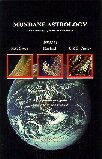
MUNDANE ASTROLOGY: Three classic books by H.S. Green, Raphael & C.E.O. Carter, $24.95
Contents: Book 1 by HS Green: Mundane or National Astrology Mundane astrology; Solar ingresses; New moons; Eclipses; Planetary conjunctions; Daily aspects; Comets; The 12 houses in mundane astrology; The Sun; The Moon; Mercury; Venus; Mars; Jupiter; Saturn; Uranus; Neptune; Countries & towns ruled by the signs of the zodiac; Transits through the signs; Conjunctions in signs; Mundane maps for conjunctions; Transits & directions in mundane astrology; The effects of eclipses; Earthquakes; Strength; Prominence; The strongest aspect; Co-operation of influences; Some mundane horoscopes; Appendix: Horoscope for foreign countries. 125 pages

Contents, Book II: Raphael's Mundane Astrology: Mundane astrology; The planetary & zodiacal signs & symbols; The 12 mundane houses, their power & significations; The significations of the planets; The essential & accidental dignities of the planets; The mundane maps; How to erect the mundane maps for foreign parts; Concerning the 1st house & planets therein, 2nd, 3rd, 4th, 5th, 6th, 7th, 8th, 9th, 10th, 11th, 12th; How to judge a mundane map; Example of a mundane map; Eclipses; The effects of solar eclipses; The effects of lunar eclipses; Planetary conjunctions; Earthquakes; Comets; The parts of the world affected by the signs of the zodiac. 80 pages.

Contents, Book III: An Introduction to Political Astrology, by C.E.O. Carter: Foreword; The aims & the subject matter; The Material Employed, part 1: Classification of the material, Astro-geology & astro-topology, Eclipses & lunations, Great conjunctions; The Material Employed, part 2: Stations, Comets, Ingresses, The nativities of important persons; The Material Employed, part 3: Inceptionals, The horoscopes of nations, Some special horoscopes, The New Year figure; Historical cycles & newly found planets; The sun, moon & planets & the signs & houses in political astrology. Appendix 1: Calculation of foreign horoscopes; Appendix 2: List of cities with suggested astrological affinities; Appendix 3: List of countries with suggested astrological affinities. 103 pages.

Comment: Here, in one volume, are three complete books on mundane, three of the best. Green & Raphael's books are the fundamentals. They are a comprehensive guide to the classic rules of mundane. Green delineates mundane planetary aspects, Sun through Neptune, Raphael delineates planets by house. The two are complimentary. Of note, Green's descriptions of eclipses by house, Raphael's description of eclipses by decanate. Raphael wrote in 1910, Green wrote about the same time.

Carter's book, building on the other two, was published in 1951. He was writing in reaction to the failure of astrologers in London to foresee the outbreak of World War II. They knew there was a full-scale war going on in China, they knew things in Europe were tense, but they had studied the mundane charts for 1939, they knew the fuss with Germany would blow over. And they were wrong. Charles Carter determined to find out why. This book was the result of his studies. His plea for better data has largely been met, but the need for more work remains.

Click for a PDF on Eclipses, by Raphael.

Astrology Classics, 308 pages overall.


CIVILIZATION UNDER ATTACK: September 11, 2001 & beyond, an astrological perspective - Stephanie Clement, editor, $10.95
Contents: A collection of essays:
  • Preface & Introduction, both by Stephanie J. Clement
  • Attack on America, by Jonathan Keyes
  • The Psychology of Terrorism, by Bernie Ashmand
  • The George W. Bush Chart, by Jonathan Keyes
  • The United States Chart, by Robert Hand
  • Putting Events on the World Map, by Robert Hand
  • "Twin" Events, by Stephanie Clement
  • Structure Clashes with Beliefs, by Robert Hand
  • All Eyes on Osama bin Laden, by Jonathan Keyes
  • The Targets: Hit or Missed, by Kris Brandt Riske
  • Life Has Changed Dramatically, by David Crook
  • Forecasting with Eclipses, by David Crook
  • Did the Perpetrators Use Astrology? by Kris Brandt Riske
  • Religion, Land & Oil, by Jonathan Keys
  • Saturn & the Slow Market Periods, by Georgia Anna Stathis
  • A New Economy, by Georgia Anna Stathis
  • The New Investment Climate, by Georgia Anna Stathis
  • Meditations on the Future, by Jonathan Keyes
  • Leadership in a Time of Terror, by Kris Brandt Riske
  • Where Do We Go From Here? by Robert Hand
  • The Great Conjunctions, by Robert Hand.
  • Conclusion, by Clement
  • List of contributors; Bibliography; List of charts & maps.

Comment: Llewellyn rushed this into print in late November 2001. Omitting the preface & introduction, but including the conclusion, there are 22 articles in this book, with an average of 10 pages per article. Most of them are intended for the general reader. Given the brevity of the articles, one is left wishing for more. Rob Hand's articles are the best & most demanding of the reader, and, as a primer of mundane methodology, are worth the price of the book.

I wish it was as simple as they said it was, but investigation is leading us elsewhere. Perhaps Astrology can help us find out what really happened, and why, on September 11, 2001, that evil day. Llewellyn, 256 pages.


MUNDANE ASTROLOGY (course XIII) - C.C. Zain, $22.95
Contents: Table of contents; List of charts; About this book; Forward; Serial lesson key;

The doctrine of mundane astrology; The cycles of Pluto & Neptune; The cycles of Uranus; The cycles of Saturn; The cycles of Jupiter; The cycles of Mars; Major conjunctions; The cycles of the sun; The cycles of the moon; Precise predicting: Eclipses.

Comment: Zain likes mundane astrology & gives it some of his best writing. Pluto, Neptune, Uranus, Saturn, Jupiter, the Sun & progressed moon are each given a chapter on their mundane cycle. A planet's cycle starts the moment it changes from South to North declination, set for the location where its influence to be ascertained (Washington DC, for example). For each of the planets mentioned, Zain gives a long list of exact dates to specific events symbolized by the cycle planet & its progressed aspects. Part of Zain's method, from page 42:

Special Affinity of the Planet Receiving the Aspect:
Observation has shown that each of the planets has such a close affinity with certain things that, no matter what house of the cycle chart it occupies, when it receives a progressed aspect from the planet for which the cycle chart was erected, there is a pronounced effect apparent where these things are concerned. Next to the house occupied by a planet, as indicating the event which may most confidently be expected, there should be considered this special affinity. As a matter of actual practice, in our mundane astrology class where the events for each day of the week ahead are forecast, and the more important events for years ahead are predicted, with later newspaper headline verification; predictions are made first as to the events affected, as shown by the house position, and then other predictions are made merely from the natural affinity of the planet aspected. These classes, which have been in existence for a great many years fully warrant at least two predictions from each progressed aspect; one based on house position, and the other, usually of less consequence, based upon the special affinity of the aspected planet.

The final chapter, on precise predicting & eclipses, gives fascinating notes on the appearance of new stars in the sky over the last 500 years & what their impact on human affairs has been. I have never seen this kind of material elsewhere & I want to see more like it. Easily the best of the mundane astrology books, an essential reference.

Church of Light, oversize paper, 179 pages.


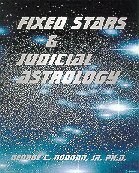
FIXED STARS & JUDICIAL ASTROLOGY - George C. Noonan, $21.00
Contents: Introduction; The nature of fixed stars; The Northern constellations; The Zodiacal constellations; The Southern constellations; Genethiacal applications of the fixed stars; Judicial astrology.

Appendices: A. The mathematics of astrology; Figure A1: Non-linear vs: linear interpolation; Table A1: Interpolation coefficients (s/k) for Newton's binomial interpolation formula; Figure A2: Annular eclipse of 1973 December 24 (world map); Table A2: Factors for computing geocentric coordinates; Table A3: Besselian elements of the annular eclipse of the sun of December 24, 1973; Figure A3, Degree of obscuration;

B. Rulership of a point in the chart; Figure B1: The houses of the planets; Table B1: The governors of the terms (Ptolemy); Table B2: Lords of the triplicities; Table B3: Lords of the decans;

C. The stars you are born under; Sidereal times of culmination, rising & setting (includes Right Ascension, Declination & latitudes 30, 40 & 50 degrees)

Comment: The first two-thirds of this book covers constellations & stars in the Zodiac & is a fair treatment of them. The last third of this book is a unique & interesting section on Judicial Astrology, now known as mundane astrology, worth the price of the book all by itself. The author explains & augments the classical methods for mundane work, including some of the best notes anywhere on eclipses, weather, geography, history, national horoscopes, solar ingresses, comets, major conjunctions (eg, Jupiter & Saturn), how the king's personal chart differs from his chart as ruler & more. This book will tell you how the ancients constructed national horoscopes that were not based on events of any kind, nor on subjective "national personality traits". If you're looking to go beyond what's in Campion's Book of World Horoscopes, beyond the annual solstice charts, beyond the geodetic stuff (listed below) this book will help you do that. With diagrams, appendices & mathematical formulas.

131 pages, AFA, oversize paper.


GEODETIC EQUIVALENTS in relation to mundane astrology, including many remarkable proofs & striking prophecies - Sepharial, $5.00
Contents: Preface; Geodetic equivalents; Sign rulership; Proofs of geodetic values; Principle towns.

Comment: Sepharial's system is to put 0 degrees on the midheaven at Greenwich, London. Places WEST of London count down from 30 degrees Pisces for their MCs, EAST of London counts upward from 0 degrees Aries. The ascendant is found by the oblique ascension of the latitude in question. Thus the ascendant for London (51 degrees 30 minutes north) is 26 36 of Cancer. At 0 degrees west on the Equator, the ascendant would be 0 degrees Cancer. At 60 degrees north, still at 0 degrees west, the ascendant will be 4 31 Leo.

In the first chapter, Geodetic Equivalents, Sepharial gives numerous examples of his system. The second chapter, Sign Rulership, details Ptolemy's division of his world into the various signs of the zodiac. The third chapter, Proofs, uses the Geodetic system with relocation, ie, a trip to a place where a malefic planet conjuncts the geodetic MC may be unfortunate. He also sketches the impact of eclipses and their geodetically-derived locations, which the author claims to be a definitive method of forecasting earthquakes. It concludes with remarkable accounts of darkness at mid-day when the moon was full, followed by two successive nights when the moon itself was obscured (May 17, 1780, New England), for which no explanation has ever been found. The final chapter gives latitude, longitude & geodetic coordinates for some 80 cities in the world.

This is what I mean when I say (on the Sepharial page) that Sepharial didn't think the way most of us do. Here is a nifty little idea that he invented (or discovered, perhaps) & found useful & described briefly. Immediately below this entry is what Chris McRae has done with this same idea. Sepharial's mind was restless. He no sooner had a new idea than he moved on to the next one. Others came later & dug into the odd corners he left behind. The world needs both sorts of people: The few who can unearth gems & cast them before us, as well as the more numerous folks willing to spend a great deal of time examining them, one by one.

61 pages. AFA, small paper.


THE GEODETIC WORLD MAP, An Astrological Concept for Personal Relocations, Financial & Political Activity & Geophysical Disruptions - I.I. Chris McRae, $18.00
Contents: List of illustrations; Introduction;

1. Definition of geodetic equivalents; How to compute; Country rulerships; Geodetic cusps of major US cities; Geodetic cusps of major cities of the world

2. Geodetic world map; National & locality geodetic identities; Similarity of geodetic coordinates with old rulerships

3. Relocational geodetic; Planetary influences

4. Geophysical disruptions; Earthquakes; Eclipses in forecasting earthquakes; San Francisco earthquake; Alaska 1964 Good Friday earthquake; Cumana earthquake; Tokyo earthquake; 1988 eclipse patterns; Volcanic eruptions; Mount St. Helens volcano; Nevada del Ruiz volcano; Mt. Pelee volcano; Krakatoa volcano

5. Following the daily news; SS Titanic; The Falklands Islands war; Double massive freeway accidents; Challenger space shuttle explosion; Three train collisions; Chernobyl nuclear power plant explosion; The 1929 stock market crash

6. Summary of geodetic predictions
7. Guide for construction of geodetic world map; World map

Appendices: i. List of references; ii. About the author.

Comment: Based on the Geodetic Equivalent theory developed by Sepharial (above). This equates 0 degrees Aries with 0 degrees longitude (eg, longitude at Greenwich). Degrees of longitude, going eastward, are then equated with degrees of the zodiac, starting at 0 Aries. The map on page 114 makes this easy to grasp. All cities & towns in Europe & Africa, east of London, have an Aries MC. All cities in the US, from just east of San Francisco, to Maine, have Sagittarius or Capricorn as MCs. Indian cities have Gemini MCs. To set up a chart for any location, convert the longitude to degrees of the zodiac to obtain the local midheaven, then look up the rising sign & houses for the latitude north/south of the equator. So, for example, San Francisco has 7 Aquarius rising, 27 Scorpio midheaven. Study transits & eclipses to the angles, insert Aries ingress planets into the houses for an annual chart, which should predict events like natural disasters. That's the idea, at any rate.

AFA, oversize paper, 116 pages.


MUNDANE ASTROLOGY: AN INTRODUCTION TO THE ASTROLOGY OF NATIONS & GROUPS - Michael Baigent, Nicholas Campion & Charles Harvey, $23.00
Contents: Introduction: Astrology in tomorrow's world

Part 1: The Background: 1. The development of mundane astrology from the Babylonians to the Arabs, by Baigent. 2. The history of mundane astrology in Europe from 500 AD to the present day, by Campion. 3. Mundane astrology & the collective, by Baigent. 4. The national horoscope: Mundane astrology & political theory, by Campion.

Part 2: The Material: 5. The Great Year, by Campion. 6. Cycles in practice, by Harvey: part 1: the concept of cycles, part 2: the planetary cycles & their interpretation. 7. The planets, by Campion, Baigent & Harvey. 8. The houses, by Campion, Baigent & Harvey.

Part 3: The Techniques: 9. Ingress, lunations, eclipses, by Harvey. 10. Where on earth 1: Astrocartography, by Harvey. 11. Where on earth, 2: The search for the earth, by Harvey. 12. Where on earth, part 3: The astrology of towns & cities, by Harvey. 13. Other techniques, by Harvey.

Part 4: The Application: 14. The astrology of war & peace: A study of the Second World War: 1. Collective pressure, by Baigent. 2. The cyclical background, by Harvey. 3. Astrological timing, by Campion. 15. The astrology of nations, by Baigent & Campion.

Appendices: 1. Financial astrology, by Harvey. 2. The start of the Age of Aquarius (as found in the Book of World Horoscopes, so presumably by Campion). 3. Heliocentric nodes in mundane astrology, by Harvey. 4. Abbreviations used in the book. 5. Some sources for the chronology of history, ancient, modern & contemporary. Index.

Comment: A comprehensive, critical and lengthy (as big as all the other mundane books combined) study of political astrology. Topics include the history & development of mundane astrology, mundane astrology & the collective, the great year, the concept of cycles, planets, houses & signs in mundane astrology, ingresses, lunations, eclipses, the search for the earth zodiac, the astrology of towns and cities, a mundane study of WWII & lots more. A classic when it first appeared as an Aquarian Astrology Handbook ten years ago, now available again in the States.

Thorsons, 523 pages.


WHY HISTORY REPEATS: Mass movements & the generations past - present - future - Theresa H. McDevitt, $19.95
Contents: Foreword; Preface; Guidelines; Introduction; List of cycles; Sagittarius cycles; Capricorn cycles; Aquarius cycles; Pisces cycles; Aries cycles; Taurus cycles; Gemini cycles; Cancer cycles; Leo cycles; Virgo cycles; Libra cycles; Scorpio cycles; Summary; Interconnection; In search of the true nativity; Quick reference; Bibliography; Testimony from a fellow author; About the author. Charts included: USA, Jesus.

Comment: This is a book about what happened in the world as Pluto transits from one sign to another. McDevitt starts with a Pluto in Aquarius period back in 305 AD, but doesn't go consecutively (sign by sign) until Pluto hit Leo in 1201 AD. She extends her survey into the future, to Pluto in Gemini, 2127-2159, but as this is a survey book, it might be best to pass over speculation.

Pluto exerts a fascination. A few months after it entered Cancer in 1914, World War 1 broke out. A few months after it entered Leo in 1939, World War 2 broke out. A few months after it entered Virgo in 1957, the Space Race. Libra in 1972, Gay culture; Scorpio in 1983, AIDS; Sagittarius in 1995: Hysteria. (These, by the way, are my terms. McDevitt agrees with some of them.) Clearly, a planet that produces such results is one to track closely.

In olden times, astrological cycles were built around the great conjunctions of Jupiter & Saturn (every 20 years), which, under the name of Great Mutations, were further qualified by the element in which the conjunctions took place. The Earth Mutation, for example, started in 1842 & will end in 2040 (for more, see Barbara Koval's excellent work in Time & Money, Llewellyn, 1993, sadly out of print). There are many additional cycles of which financial astrologers have long been aware. Modern natal astrologers, by contrast, tend to limit themselves to a planet's journey through the signs, as here.

AFA, 122 pages.


CYCLES OF TIME: Charting the mood swings of America - Jacqueline C. Whyte, $12.95
Contents: (You might have heard of these before.)
  • Introduction (For everything there is a season)
  • Cycle 1 (A time to be born & a time to die)
  • Cycle 2 (A time to keep & a time to cast away)
  • Cycle 3 (A time to rend & a time to sew)
  • Cycle 4 (A time for war & a time for peace)
  • Cycle 5 (A time to break down & a time to build up)
  • Cycle 6 (A time to seek & a time to lose)
  • Social Movement Cycles (A time to keep silence & a time to speak)
  • Opposite Cycles (To every action there is always opposed an equal reaction)
  • Conclusion (There is a tide in the affairs of men)
  • Notes.

Comment: This is a book that details how Uranus, transiting the houses of the American chart, produce changes in American life. The US chart in question is for July 4, 1776, 2:14 am-ish, Philadelphia. It's the one with 7 degrees, 14 minutes of Gemini on the ascendant. By "cycles", the author means the 2-house transit of Uranus. Cycle 1 is houses 12 & 1, cycle 2 is houses 2 & 3, etc. For each cycle, she picks significant events for each of Uranus's 3 trips through the houses. Judging by the long list of acknowledgements, a lot of work went into this book.

Manifest Press, 158 pages.


SOUL-SICK NATION: An astrologer's view of America - Jessica Murray, $19.95

Contents:

Dedication
Acknowledgement
Preface

1. Soul-sick: America in crisis
2. The USA chart: Sun, Moon & rising sign
3. The god of secrets: The planet Pluto
4. Money neurosis: Pluto in the second house
5. Power madness: Pluto & American hegemony
6. Big daddy of the world: Saturn at the top of the chart
7. Kill your television: Pluto opposite Mercury
8. Of the people, by the people, for the people: America's Uranus
9. The dark side of glamor: America's Neptune
10. The temple in flames: Pluto in Sagittarius
11. Lightning strikes the towers: The Pluto-Saturn opposition
12. Cosmic echoes: Recent & upcoming transits
13. Becoming an agent of transformation: Pluto work
14. Becoming a global grown-up: Saturn work
15. A new era

Appendices:
1. Astrological principles & terms
2. Saturn & Pluto through the twelve houses

Bibliography
Sibley chart of the USA

Comment: The author did her promotional homework. The first four pages are pre-press reviews, with the back cover filled with more pre-press reviews. Some 29 or maybe 31 in all (I didn't check for duplicates.) Should be good for sales.

So I've just finished typing out the table of contents (which you should always read) & I see SunMoonAscendant, Pluto, Pluto, PLUTOPLUTOPLUTO! and SaturnUranusNeptune. So enough preliminaries. Let's look at Murray's book.

Murray basis much of her analysis on the chart for 5:10 pm, 4 July, 1776, Philadelphia, the Sagittarius rising chart. She labels this the "Sibley chart", which is incorrect. The Sibley chart was a special construction. For details, see Nicholas Campion's Book of World Horoscopes, pgs. 363-366. There are, by the way, numerous other significant US charts, such as de facto independence on 17 October 1781, de jure independence on 3 September 1783, the approval & signing of what became the US Constitution, 17 September 1787, the swearing-in of the first president, on 30 April 1789, and numerous other dates, some of which can be found in Campion's famous book. All of which are worthy of study, and many of which have been active since January 20, 2001. In particular I suggest study of the dates of the foundings of the various branches of the US military. As it has been suggested the famous Declaration was forced by the French, what came to be known as the ultimate expression of American individualism might also be seen as an early diplomatic blunder by the 22 year old Louis XVI, who had been king only two years.

I am trying to find something in the book that sums it up. Normally one looks at the Preface and/or the final chapter, but I found both unsatisfactory. From the Preface:

It is time to consider astrology, too, in a larger way. The stakes are too high at this point in human evolution to keep the great truths of the ancients in a stuffy old library, or persue them as a mere hobby. We need to pull out all the stops right now to see what is really going on in the world.... This book will seek to shed light on difficult & confusing global issues by looking at them from a celestial distance: a point of view that is vastly higher up and farther away than sociopolitical viewpoints alone can offer. (pg. xiii)
Finding a quote from the final chapter, 15, A New Era, is harder:
It starts to feel like it's not enough to try to act like a grownup just because we are penalized if we don't - like at work. It feels insufficient to try to be responsible in personal relationships just to avoid conflict; or to vote on election day just to avoid guilt. We start to realize that the act of responding confers self-respect, whereas reacting takes it away. Gradually, this sense of responsibility starts to feel inner-directed rather than outer-mandated. We begin to conduct our lives as if everything we do matters. (pg. 194)
Which is religion, not politics nor astrology. The author follows this with an appendix, What is Astrology?, where the question is answered in strict metaphysical terms. Then follows Astrological Terminology / Astrology 101, a short primer on what planets & signs & houses mean in natal charts, and then Saturn and Pluto through the Twelve Houses of the natal horoscope. The Bibliography features lots of books on natal astrology (those by Arroyo, Greene & Rudhar chief among them), but none on mundane astrology itself. It is usually safe to surmise that bibliographies, such as this, are the contents of the author's personal library. If the author has read any of the classic books on mundane astrology, she, like Richard Tarnas, has been careful to keep the fact a secret.

What you do get in this book is a lot of stuff like the following. See if you like it:

Mass Yearnings
It is a grand irony indeed when a culture that forces its female executives to wear sharp-seamed suits suddenly goes all mawkish when the band starts to play God Bless America. Uncle Sam may denigrate emotional wisdom in every part of society from politics to business, but when the trumpet starts to play he tears up like a girl. Perhaps this is Neptune's revenge on the patriarchy: If you do not acknowledge Feminine Knowing, I will make the biggest and toughest among you weep at baseball games. (pg. 102)
This is a one-off observation, it is not developed. There are many such in the book. When they are spoken aloud they make for good sound-bites. Like the numerous reviews in the front of the book. So, what about those reviews? The author asked a number of individuals to write nice things about her book. Which they did. (Well, wouldn't you?) Some of them were actual reviews, meaning they were published somewhere as such. The rest were solicited opinions. Astrology has yet to develop actual constructive / analytical criticism, aside frome me, and the boys (they're all male, every last one) in India.

In sum, this is a book that will stir & motivate & make you feel like a good what for! and why not? and then lead you to the Ultimate Solution: The further contemplation of your own navel.

MotherSky Press, 221 pages.


COSMIC TRENDS: Astrology connects the dots - Philip Brown, $14.95
Contents: Acknowledgements; A note about Pluto; Introduction;

Part 1: Connecting with Pluto: 1. Transformational Pluto; 2. Six generations of Pluto, 1912-2008

Part 2: Connecting with the future: Pluto in Capricorn: 3. Saturn, Capricorn's security blanket; 4. One if by land: The new age of threat levels; 5. Blowing a carnival horn; 6. "Who's there?" Seeing behind the mask; 7. Ben goes electric: Inventing the future

Part 3: Comming attractions with Uranus & Neptune: 8. The dreaming planet: Neptune; 9. The freedom planet: Uranus; 10. Visions of Utopia: The Uranus-Neptune connection; 11. Uranus & Neptune star in Trading Signs; 12. Future trends with Uranus & Neptune

Part 4: Seeing the big picture: Planet cycles & major trends: 13. A tidal wave: The Neptune-Pluto conjunction; 14. Seeing Paisley: The Uranus-Pluto connection; 15. Glimpses of 2020: Jupiter meets Saturn

Appendices: A. Planet & sign keywords; B. Glossary; C. Connecting with the zodiac signs; D. Outer planet transits & major conjunction charts; E. Chart data & sources

Bibliography; Index.

Comment: This is another in a series of books, by a variety of authors (and their publishers) that have postulated Pluto as the ultimate chronocrator (time-keeper) for the world. I do not know why. I do not know why.

Anytime we start with the premise that the outermost must also be the ultimate, we are starting with ideology, to which we must then fit facts. Which Brown does in this book.

The rationalization for Brown's book appears to be on page 13:

When Pluto goes through signs of the zodiac, it brings to the surface certain traits for each generation. Pluto puts its stamp on an era, and each generation of Pluto carries the imprint of that sign for a lifetime. The cross-influences of Pluto eras and Pluto generations help shape history, major trends, and current events.
Brown then gives a general overview of the successive Plutonian ages, starting with the entry of Pluto into Cancer, in 1912. Cancer promoted unionization (he somehow forgets Russia's Communist revolution). Leo, which started in the late 1930's, is the age of Inner Children, who are idealistic, perhaps even unrealistic. Virgo, starting in the late 1950's, is the engineer's sign (he somehow overlooks the Space Age). Libra, from the early 1970's, saw the divorce rate peak. Scorpio, starting in late 1983, is defined as grunge, punk & 12 step programs. There is no mention of AIDS. Sagittarius, starting in 1995, Brown defines as a religious / spiritual age, as well one of "bigness" in general (big SUV's, for example, although as far back as the 1930's, Americans have always had big cars). He gives various examples for both. I would have thought fundamentalist ideologies to be far more significant. (Do you see the importance of inclusion & omission in a book like this?)

The upcoming Pluto in Capricorn era, 2008-2020, forms the heart of Brown's book. According to Brown, those years will be characterized by:

Security
A carnival atmosphere
Masks, by which I think he means deceit
Self-made individuals

I would have thought that Pluto's transit through Saturn's negative sign, which is also the exaltation of Mars, would simply produce one disaster after another, as Pluto runs up against the influece of both Saturn & Mars, none of whom like the others. In metaphysics, the Cancer / Capricorn axis is said to be one of incarnation vs: initiation, with true meaning of "initiation" being ritualized death. This doesn't sound good to me. I would like to be wrong.

Brown's short-list was so interesting that I got out Lehman's Book of Rulerships & had a go. Not finding "security" or "safety", I found "refuge (for thieves): Aries". Not finding "carnival", I found "feasts: Venus". Not finding "masks", I found "deceit: 6th house". Not finding "self-made", I found "inventors: Mercury". For "Merchants" I found Mercury, Aquarius & Jupiter.

At this point I think we may leave Brown's speculations aside.

Looking beyond his delineations, what are the big astrological events, aside from Pluto in Capricorn, that are due in the near future? Appendix D is a list of outer planet conjunctions & sign ingreses, from 1914 to 2039. In it, we find that Uranus will enter the sign of Aries in 2010.

Here is what we don't find: Jupiter conjuncts Uranus as both enter Aries, summer, 2010. Saturn conjuncts Mars, as both enter Libra, summer, 2010. And so, by deduction, Uranus/Jupiter opposes Saturn/Mars, summer, 2010, smack across the Aries point. I stumbled across this rather spectacular lineup while I was working on my ephemeris in fall, 2006. I was hardly the first to discover it. I made inquiries. It has been circulating in astrological circles like a dirty little secret, for several years now.

This is the kind of thing you overlook when you combine ideology with lack of preparation. When my store was in Ventura, CA, Phil Brown was a frequent & welcome visitor, as he lives nearby. I wish I could have been around to help him on this book, since I may never get around to writing a book myself. I like to think I can be a useful gadfly.

Llewellyn, 218 pages.


UNDERSTANDING THE FUTURE: A survivor's guide to riding the cosmic wave - Lyn Birbeck, $17.95

Contents:

Astro-quantum health warning
Author's note
Introduction

1. Surf's up!
2. The Uranus/Pluto mother-wave 2007-2020
3. Saturn/Pluto waves, 2007-20
4. Saturn/Neptune waves, 2007-20
5. Saturn/Uranus waves, 2007-22
6. Jupiter waves between 2007 and 2020

Appendices:
1. Astro-quantum
2. Planetary cycles
3. Uranus/Pluto mother-wave: historical record & major storm overview, 1900-2019
4. The beginning of the Aquarian Age & the end of the Mayan calendar
5. The planet house transit guide
6. Hotspots
7. The planet wave year by year index

Comment: The book is subtitled, The major astrological predictions from now to 2020 and how they will shape our world. The book is copyright 2008. The premise of the book is to list all the upcoming major transits & try to make some sense of them. The summary is in Appendix 6, entitled, Hotspots. It functions as an index for the book. In the Astro-Quantum Health Warning is this:

This Book is not about prediction. This book is about "conditions today" as seen through the lens of past, present and future planetary motion and symbolism which is astrology, and of the various theories in quantum physics, especially one called Observer Created Reality. Both, in real or metaphysical terms, state that how we are, and how we see it, is how we make it. In other words, and particularly with the help of these two subjects ...

We Make Our Own Future Now (pg. vii)

On the next page, the author says the book was completed in November, 2007. He lives in the Lake District of England.

Despite what the author says, this is a book of prediction. The publishers are no fools. (Watkins is a major London bookseller that has long been active in publishing.) They want something that will sell, and almanacs, which this essentially is, sell quite well, thank-you very much.

Any fool can take an ephemeris & plainly see the next dozen years will be horrific. Any intelligent, living fool has been depressed ever since it first came to his attention, and I make no claim to be an exception to this rule. It is only the interpretation that is in question. So. What is the author looking for? What is Lyn Birbeck's point of view?

You will find it in the introduction. Here is his list, in order:

Global warming; energy; terrorism; extremism/crime/violence; nuclear war from "rogue states"; dodgy science, which she defines as bad nuclear reactors, pollution & GM crops; too much reliance on computers; outdated economic structures; too much air travel/too much migration; overdue natural disasters, like the volcano in Yellowstone Park. (adapted from pg. 1)

We now fast-forward to pg. 298 of Appendix 6, Hotspots. September 2008 has one hot day: September 8. It has three entries, which refer us to a total of seven pages in the book. Here is a summary of what Mr. Birbeck believes may have happened at that time (I write on October 3, 2008):

Favorable, happy, positive; positive awareness, agreement between factions; helpful & productive; great destruction; disruption exacerbated (global warming & economy are mentioned). - Was this helpful?

As we now know, global financial markets very nearly collapsed shortly after September 8. Data is still coming in that suggests the US economy (the only one I know anything about) may have collapsed during that month. And from what I've read, global financial collapse is still on the cards. Despite, or perhaps because of, the bailout.

As is typical in books of this sort, the author compiles long lists of "what happened the last time these two planets got together" and then uses that in an effort to project what might happen the next time they meet. This is a lot like the military preparing to fight the last war, and being surprised by what actually transpires once armies start to march. It spares the lazy general - or author - the necessity of actually LOOKING AT and THINKING ABOUT the world as it exists TODAY.

For example, we know there will be bad times ahead. We think it will be something like what we've been told of the Great Depression. So, yeah, sure, we're "prepared".

But it will be completely different. America, during the Depression, was energy self-sufficient. Most transport was via the rails. Foodstuffs were locally produced.

In 2008, America imports roughly half its oil. Long haul truckers, as well as air cargo, now exist. Most food production is concentrated in isolated regions of the country, and, for the most part, is trucked here & there.

So what happens if, as is expected, oil is no longer priced in dollars, but Euros, and if, as a result, the dollar itself collapses? If this happens, imported products suddenly become very expensive. Imported oil. Gas at the pump. I recently heard a story that in Russia in the 1970's, food was cheap. Rent was cheap. But gas to drive to the summer dacha cost a month's wages. Why? Because, at the time, Russia produced little of its own oil. It had to import oil, and the Rouble was worthless.

So what if that were to happen in America? What if the dollar became the new peso & gas went to $15 - $20 - $30 dollars a gallon (not yet a month's salary per tank, but getting there)?

Long haul trucking would collapse overnight. It's already at death's door. (Look at produce prices in the supermarket.) Same for the airlines. Without trucks, how will California get its produce to New York? How will New York avoid starvation? Yes, there are trains, and yes, they are hugely efficient, by comparison to trucks & planes, but there are only so many rail lines. There are only so many locomotives. There are only so many boxcars, and there's going to be a lot of demand for them. There's another old story from the Soviet Union, from the 1970's & '80's. That every year there were bountiful harvests in the Ukraine that simply could not be moved to the cities in the north before it had spoiled in the fields. Weren't enough rail lines. Weren't enough trains. Year after year. People in Moscow starved. They needed trucks they could not afford & which did not exist.

America, like Russia & China & all large countries, now depends on cheap transport for its very existence. This is only one of the things that have changed "since the last time". Will 2009, with Pluto in Capricorn, opposing the fertility of Cancer, bring food rationing to the US? Your guess is as good as mine. One way or another, it's going to be a lot of fun the next few years.

But the author is not writing about the US. He is writing about England & what he supposes may transpire there. It's a smaller country. Possibly things will be better in the UK. We can only hope things will be better somewhere.

Watkins, 310 pages.


Mundane Astrology: Mundane Astrology Books Mundane Data Collections


See also Eclipses


The Astrology Center of America

207 Victory Lane, Bel Air, MD 21014
Tel: 410-638-7761; Fax:410-638-5154; Toll-free (orders only): 800-475-2272

Home Author Index Title Index Subject Index Vedic Books Tarot E-Mail: Dave


Established 1993, The Astrology Center of America is owned & operated by David Roell.
This entire site (AstroAmerica.com) is copyright 1996, 1997, 1998, 1999, 2000 by William R. Roell.
All rights reserved.