The Astrology Center of America, 207 Victory Lane, Bel Air, MD 21014
Tel: 410-638-7761; Fax:410-638-5154; Toll-free (orders only): 800-475-2272
Home Author Index Title Index Subject Index Vedic Books Tarot E-Mail: Dave


Astrological Research, page 2


Astrological Research: Page 1 Page 2 Page 3 Page 4 Page 5


Indicates a book on our Top Ten list. If you would like to find more books like it, click on the star.
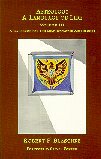
ASTROLOGY, A LANGUAGE OF LIFE vol. 3: A Handbook for the Self-Employed Astrologer - Robert Blaschke, $18.95

Synopsis: Did you ever want to live the glamorous life of a professional astrologer, read charts for a living? This book will tell you everything you need to know - and then some!

Contents, comment.

Earthwalk School of Astrology, 166 pages.


THE PRENATAL EPOCH - E.H. Bailey, $23.95

Contents:

Introduction
1. Objections answered & refuted

Section 1: The scientific basis & laws of the epoch
2. The astro-physiological basis of the epoch
3. The practical uses of the epoch
4. The laws of the prenatal epoch
5. The paramount law of sex

Section 2: The prenatal epoch as a factor in rectification
6. Preliminary steps
7. First steps in rectification
8. Rectification by epochs of the first order
9. Illustrations of epochs of the first order
10. Rectification by epochs of the second order
11. Illustrations of epochs of the second order
12. Rectification by epochs of the third order
13. Illustrations of epochs of the third order
14. Rectification by epochs of the fourth order
15. Illustrations of epochs of th fourth order
16. The cause of irregularity
17. Final considerations

Section 3: Some astro-physiological problems
18. The period of gestation
19. Marriage & the epoch
20. Illustrations of short & long period births

Section 4: The prenatal epoch & multiple pregnancy
21. Fallacies & facts in relation to twins
22. The astro-physiological laws of multiple births
23. Illustrations of twin births
24. An illustration of multiple birth
25. Divergence of character & fortune in twins

Section 5: The epoch in relation to prenatal affections
26. The chart of descent
27. Illustrations of prenatal abnormalities
28. The date of quickening

Section 6: The prenatal epoch as a factor in directions
29. Directing from the prenatal epoch
30. How to calculate directions from the epoch
31. Epochal directions illustrated
32. Illustrations of epochal directions
33. Primary directions & the epoch

Section 7: The prenatal epoch & infant mortality
34. Infant mortality
35. Illustrations of infant horoscopes
36. The procreation of children
Conclusion

Section 8: Appendix
Some mathematical rules
Tables of ascendants

Comment: Many people ask, why do astrologers study birth charts, why do they not study the moment of conception? This is not a new question.

The reason for birth charts is that birth is a significant, easily determined moment in time. The reason against conception is that it's darn hard, in most cases, to figure out exactly when that was. You need a technique.

The standard technique, which was not new to Bailey - nor Sepharial, his muse - was to go back nine months, interchange ascendant & moon, and call that the Epoch, or moment of conception. This is as far as Ivy Goldstein-Jacobson ever took it. The problem was the simple interchange did not work in all that many cases. The solution, which both Sepharial & Bailey gradually arrived at, was an additional three epochs. Which one applies to you depends on where the moon is by house, and the angular relationship it has to the sun.

As to the various goodies in this book, read the Table of Contents (above) carefully: The prenatal epoch is a factor in rectification, twins & multiple births, and birth defects. It can also be used with directions, primary directions & more. Which amounts to an entire school of astrology, if anyone wants to push it. Towards the end of Bailey's life (1876-1959), Hans Niggemann, of Uranian astrology fame, got him to admit there should be even more rules & epochs, but until someone else is so inspired, E.H. Bailey's work is the standard which all others must meet.

Click here for an extract (pdf).

Astrology Classics, 239 pages.


THE COMPLETE BOOK OF CHART RECTIFICATION - Carol Tebbs, $34.95

Contents:

List of tables
List of figures
Introduction

1. Doing the groundwork to verify birth times
Begin by compiling a list of a dozen or more major life events with dates; Limit early searches for aspect hooks; Astrology software is best for rectification searches; An overview of modern astrological techniques & their usefulness

2. Setting a procedure for the rectification search
Establish a working chart set for noon or the midpoint of the known time range; Study known natal chart elements to find a 1 degree orb hard aspect hook; What if the chart contains no 1 degree natal aspects?; A procedure for the rectification search; Work from the hard aspect & event hooks to search for the angles & the Moon; Time to tally some preliminary results; Now go out on a limb: experiment with the short list of times

3. Rectification example one: Actress Elizabeth Taylor
Next, search the natal chart for 1 degree hard aspect hooks; Time to list the important life elements for Elizabeth Taylor; Once the background work is complete, begin the rectification search; Now select the most dramatic events in close time proximity for the initial search; Four important events or event clusters for Taylor's rectification search; Now run secondary progressions for smaller increments of the narrowed time range; Now use outer planet transits to narrow down one or two promising times; Retrograde & stationary periods greatly extend the effect of any transit; Extenuating circumstances that extend the impact of outer planet transits; Retrograde & stationary periods mark outer planet transit shadows for Elizabeth Taylor; If you are still undecided on the best birth time, run solar eclipses for the events

4. Rectification example two: singer Johnny Cash
Set the working birth time for Johnny Cash & find the hard aspect hooks; Create a list of notable life events for Johnny Cash; Find the dwad placement of Cash's natal Moon; Begin the search to derive the birth chart angles from life events; Tally the preliminary search results to narrow the possible birth time range; Search the secondary progressions to confirm early results; Search the outer planet transits to confirm early results; Search solar eclipses for key events for final birth time confirmation

5. Chart comparison of time twins: Elizabeth Taylor & Johnny Cash
Recognize how location & date can affect the angles; Compare the dwad placements of angles for Cash & Taylor; Outer planet transits activate Cash's & Taylor's close natal aspect patterns simultaneously; Solar eclipses activate Cash's & Taylor's close natal aspect patterns simultaneously

6. Rectification example three: female
Examine the significant natal close aspect networks; Derive a working midheaven from the "hook" aspect network; A reminder for those hand-calculating; Remember the basics of time; Narrow the field for ascendant candidates; The progressed Moon gives "secondhand" timing accuracy; The adjusted calculation date - obsolete in the computer age; The progressed Sun & inner planets can mark key life events; Progressed to progressed aspects can confirm birth time; Outer planet transits can mark potential Moon & angle positions

7. Rectification example four: televangelist Jimmy Swaggart
The Swaggart marriage; Death of two key women & mentors - mother & grandmother; Swaggart is arrested with prostitute; Public confession on television/Swaggart defrocked as minister; Swaggart is arrested again with prostitute

8. Summary of procedures for rectifying birth times
Frequently asked questions

Appendices:

A. Finding the Adjusted Calculation Date

B. Calculating secondary progressions & assessing the year: Calculation of progressions; Understand the natal patterns as well as planetary motion; Prioritize what's really important in the progression; Long-term cycles sometimes move together to extend their effects

C. Calculating solar arc directions & assessing the year: Calculating solar arcs; Forecasting with solar arc directions

D. Timing months & years with outer planet transits: How to do a transit search on Solar Fire 5.0 or 6.0; How to do a transit search on Kepler 7.0; General duration of outer planet transits; Approximate calendar time for moving planetary factors to activate 1 degree in the natal chart; Regrograde periods extend the effect of any transit; In conclusion; Frequently asked questions

E. Seeing the big picture with life declination graphics: Graphing declinations using Astrolabe's Solar Fire 5.0 or 6.0; Graphing declinations using Matrix's Win*Star 2.0; Graphing the lifetime declination by hand; Interpreting the progressed declination graphic using the Moon; Interpreting planets in progressed declination; Interpreting natal out-of-bounds planets; Interpreting progressed planets & angles at maximum north or south; Interpreting progressed planets & angles at crossover; Practice; Frequently asked questions

Bibliography

Comment: Not a book for the faint-hearted. Charts, tables, diagrams, 90 degree graphic ephemerides are found on nearly every page. (Which accounts, I think, for the high price: A lot of work went into this book.) Notably, Tebbs did not choose just any charts to rectify. Her first two examples are Elizabeth Taylor & Johnny Cash. I was amazed to learn these two were born just 18 hours apart! Making them time twins.

Follow the detailed instructions in this book, and you, too, can learn to rectify. Carol's rectifications are to one to two degrees on the ascendant, ie, 5 to 10 minutes of time. Which is to say it isn't the ear-splitting nearest-second-of-time Uranian method, which I always found unsettling. If you want more accuracy with Tebb's method, you will need to closely observe subsequent transits. But this is well-known already. All rectifications are tentative, none are ever completely proven.

As impressed as I am with this book, I was surprised with Tebbs's contrast of Taylor's & Cash's charts. In chapter 5 she strains to show the actual differences between the two charts, the two human lives in question, in which every planet in one chart, save the moon, is exactly conjunct the same planet in the other chart. She contrasts Taylor & Cash's angles from ascendant to midheaven, the dwads of the angles, she analyzes outer planet transits activate Cash's & Taylor's close natal aspect patterns simultaneously (head, pg. 79) but while she knows that differences in houses have something to do with their individual transit responses, she is unable to make house structures themselves come to life to account for them. Surely it cannot be that I am the only person who can read a chart!?

This is a fabulous book. You can almost learn the technique by reading the table of contents, above. This book will repay study many times over.

Llewellyn, 198 pages.


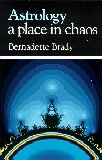
ASTROLOGY A PLACE IN CHAOS - Bernadette Brady, $28.00
Contents:
Foreword

1. Two worlds - Cosmos & chaos
2. The war of the worlds
3. The stirring of Tiamat
4. Where chaos meets astrology
5. Living inside a Fractal
6. Working with chaotic astrology

Glossary
Bibliography
Index

Comment: As neither the title of the book, nor the chapter headings, are very helpful, let's go through this book chapter by chapter:

1. Two Worlds - Cosmos & Chaos. A survey of creation myths, starting with the one in Genesis, which the author learned at an early age & how Darwinian theory impacted it. Brady briefly describes her Celtic ancestry & the various rituals common to her family, culminating in her introduction to astrology. Then we have Aboriginal & Chinese creation myths, a glance at the Egyptian & Greek & some others. These are contrasted and compared. Serious analysis is not attempted, in fact, I don't think it ever occurred to the author.

2. The War of the Worlds. What it's like in the cursed, chaotic region beyond the walled world of order, the denial of that world, as related in the Babylonian creation myth of Enuma Elish. This is the story of Marduk & Tiamat. This is related, in a general sense, to other myths, including Ridley Scott's 1979 movie, Alien. Brady writes,

As we have already discussed, cosmic thinking requires a causal logic, a linear simplicity & a series of events that can be used to build further knowledge. In contrast, chaos thinking is based in seemingly non-causal links between patterns reliant on repeating themes with no regard to size, time or nature. (pg. 33)
You may forgive me if I say this does not make sense. Things are related, or they are not. If chaotic items can be related, by any means whatever, then they are not chaotic. She continues,
In Eastern philosophy these differences are allowed to stand side by side. (pg. 33)
She then goes on to conclude that the categories of cosmos & chaos are distinctly western, Christian ideas. As Cosmos vs: Chaos is underlying principle of the book, this would seem to reduce the overall size of the book to a Western squabble. She then goes into a brief history of how the West reduced pre-Greek chaos to the clock-work order of the late 19th century. She then relates how astrology has managed chaos vs: cosmos, but as she has not studied ancient astrology (Ptolemy is the only one, and as we now know, he was not typical of his day) she concludes that astrology can be either purely mechanical (Cosmobiology) or mystical/religious.

3. Chaos for beginners - The stirrings of Tiamat. This starts with the story of how fractals & chaos theory were invented, by Edward Lorentz at MIT in 1961. I will cut to the chase & say that Brady supplies much more analysis, much more detail here, with computers & programs & such, than she ever mustered in the sections on mythology. This is understandable. Computers, fractals, chaos, are products of the modern world, in which Brady lives. It is everyone's home turf. Suffice to say that Lorenz found chaos late one night by means of a malfunctioning computer program (one intended to simulate weather). Chaos turns out to be a product of number manipulation. (This is my conclusion, not the author's.)

Personally, I found it hard to follow the book past this point. It seems to say that because a program to predict the weather failed when input was rounded to the third decimal point (from the sixth), therefore the world is a weird & strange place. Brady does not tell us how this conclusion was derived.

Numbers are strange things. How you look at numbers determines what the numbers really are. As a quantity, the number 5.345634 will always be a subset of the number 5.345. As an address (perhaps as in a computer's memory array), 5.345634 has no relationship whatever to 5.345, except as we, human beings, may give to it. So far as virtual addresses are concerned, they may be miles apart. Brady writes,

Lorenz decided to focus on this phenomenon of making one small change to a variable creating unpredictable results. In 1963, he presented a paper [Deterministic nonperiodical flow, in the Journal of Atmospheric Science] on this work and eventually it became entitled, "Predictability: Does the flap of a butterfly's wings set off a tornado in Texas?" He had discovered what was later defined as Sensitive Dependent to Initial Conditions and this became reduced to its initials SDIC. What SDIC indicates is that the smallest change in a complex interrelated system at the beginning of a process gives rise to disproportional differences at the end. (pg. 57)
With all due respect, this is what happens when you manipulate numbers. Multiply $4.24 times $7.67 and you will get an answer that does not exist in real finance (ten-thousandths of a dollar, or hundredths of a cent). It will also, by the way, be an answer that is not valid in terms of pure mathematics. If the result ($32.5208) is multiplied & divided further (by numbers themselves derived by such means, perhaps), the results becomes increasingly worthless. But as a basis for pretty pictures? Sure. Simply because a result is invalid as a quantity does not make it devoid of other uses. The mistake is the interpretation, not the result itself.

At this point Brady says how Lorenz's program proved the weather was not a linear system and that, therefore, it must be a chaotic one. I looked in her Bibliography but did not find C.C. Zain's book on Weather Predicting, nor Kris Brandt Riske's Astrometeorology. This omission may make her book an effort in circular logic, but let's be patient & see what she does with her materials.

Tiamat stirs about to page 81. It tells how the world can be described as a series of numerical calculations and how this is done without the hand of man being visible. I'm sorry, but I didn't buy it. Two-point perspective did exactly the same for Renaissance artists, and they were just as excited as Brady is now. (Myself, I mastered two point, one point, three point, and, eventually, four, five & six point perspectives.) This is technique, nothing more. The tubes of paint you buy from the store determines the colors of your canvas. The numbers you feed into your fractal generator determine the outcome. Are scientists & mathematicians too shy to claim the title of "artist"?

4. Where Chaos Meets Astrology. How the story of Leonardo's Mona Lisa can be described as phase portraits, attractors, saddle points, bifurcations & topological characteristics, the nomenclature of chaos theory. How horoscopes can be described in Chaotic terms. This is a reductionist approach & has been attempted many times, as Brady herself notes on pg. 107. She says, correctly, that in the past astrology has been resistant to reductionist approaches. This book is evidence that Brady believes that this time she's the one who finally got it right. She says,

Nor, chaotically thinking, can it [astrology] seek a place within artisan god-based religions, steered by some divine external hand, for the spontaneous emergence of patterns and order from the void does not require, nor have any place for a cosmic order. (pg. 107)
This is where the problem lies, with a Sunday-school understanding of religion & ritual. A century ago considerable effort was made to show what religion really was, but it was rejected & today is known & understood by only a few. The resulting self-imposed scarcity of knowledge does not change the greater reality of the actual world, even if that awareness is limited to a few.

5. Living inside a Fractal. Fate & freewill, that old chestnut. Life described in chaos theory. New patterns emerging on the edge of chaos. Telos - the idea that a block of marble wants to be a sculpture by Michelango.

6. Working with Chaotic Astrology. Here are the main points to chaotic astrological counseling:

Find, using predictive astrological techniques, the times of bifurcation or tipping points - this is when change will come into the person's life, the time when they will be visiting "the edge of chaos."

Suggest that the person in this time period change their daily routine in some way in a repetitive manner. This is iteration which helps to produce a new order. [We used to call that making a new habit.]

Define the quality of the nature of the potential new patterns that want to emerge at this time through the use of normal astrological predictive techniques. [To the extent that you, as counselor, understand them.]

Encourage the person to watch for the first new patterns via coincidence, serendipity or even synchronicity, of the new opportunities they wish to harvest.

Once the person sees the new patterns, they need to have the courage and the trust to act on the small fragments of opportunities presented to them. [Good luck!] (pg. 156)

A few pages later,
Thus the astrologer would know that if they can help the client create a small change in their attitude at the right time of their life, then this will lead to huge changes... (pg. 161, emphasis in original)
This is, sad to say, the usual "astrologer as god" stuff that gets so many astrologers into trouble.

Conclusion: If you agree with the philosophy, you will like this book. If you do not have a philosophy, you might like this one. It seems I fit in neither category.

Wessex Astrologer, 178 pages.


THE 144 DOORS TO THE ZODIAC: The Dwad Technique - Thyrza Escobar, $13.00
Contents includes: Astro-vocabulary - natal planets, lilith and lulu, moon's nodes, rulership, disposition; Some divisions of the zodiac - signs, decanates, faces; The 144 duodenary divisions; Dwad signs and houses; The wheel within each sign; Natal planets in dwad houses; About the natal sun; Ruler of the sun's dwad-sign; Dwads and the radix ascendant, true nodes, lilith and lulu, longitudinal parallels, synastry, mundane astrology, horary astrology, transits, eclipses, new and full moons, planetary stations, mercury retrograde and conjunctions. Examples feature Bernard Baruch. Appendices: The composite dwad-wheel; The star wheel of Bernard Baruch; Supplementary composite dwad-wheel; The supplementary dwad-wheel for Bernard Baruch; An easy way to find the Chaldean rulers of the decans; Sub-dwads; The sub-dwad of Mr. Baruch's natal sun; Sub-dwad of the earth. 109 pages including bibliography. AFA, paper.


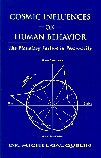
COSMIC INFLUENCES ON HUMAN BEHAVIOR - Michel Gauquelin, $19.95
Contents:
Foreword by J. Allen Hynek; Confession in the form of a prologue

1. Is the universe astrological? Man in isolation; Man in infinity; Cosmic clocks; An old subject of scientific study; A difficult crossing

2. The return of the planets: Pirate emissions; The planetary tides; Radio disturbances; Magnetic tails

First Interlude: Louis XIV, the Sun King

3. The gold nugget: Stellar movements; An astrological roulette wheel; The roulette wheel deviates

4. The stars & success: The pursuit of birth records; The busy hours; The slack hours; The "ideal" curve; Proof from unknown persons; The structure of the results

5. Success & character: The two factors behind success; A questionnaire containing one hundred traits; Psychological portrait of the professions; Professional families

Second interlude: Four portraits of men of the theater: Jean-Louis Barrault; Jean Vilar; Marcel Achard; Gustav Nadaud; A planet for every temperament

6. Planets & character: Need for biographical studies; Character traits: the basis of the investigation; Alfred Nakache

7. The Mars temperament & sports champions: Sport examined microscopically; Evidence; The motivations of sportsmen; The sportsman & life; Champions with an "iron will"; A good picture of the Mars temperament; "Weak-willed" champions; A picture contrary to the Mars temperament

8. The Jupiter temperament & actors: Psychology of the actor; Two types of actor; The typical "modest" actor's temperament; Vocation & temperament

9. The Saturn temperament & scientists: Portrait of the "classical" scientist; Portrait of the "original" scientist; The theater & mushrooms; A saturnine football player

10. The lunar temperament & writers: A chameleon satellite; Countless moons; The moon & Saturn: a poor combination

11. The diagnosis of temperament: Four psychological continents; Planetary typology; A language problem

12. The planet with a thousand faces: Jupiter & entertainers; The immoderate; The conquerors; The tyrants; When two Jupiters meet

13. Planetary types & modern psychology: Introversion & extroversion; Body build & cosmic types; The biochemistry of behavior: an explanation?; Body & facial language

Third interlude: "Like father, like son": Lucien & Sacha Guitry

14. Cosmic genetics: The wolves & the lambs; Hereditary sensitivity to the cosmos; 25,000 births of parents & children; The planetary effect heredity; Concurrence with genetic laws; The father's strange role

15. The baby's role in timing birth: The brake; A hormone "out of circulation"; The fetus gives the signal; "Consumption" by the fetus; The accelerator; A schedule for births; Parturition during office hours; A china shop

16. Planetary effect & parturition by appointment: Planetary effect & caesarean births; The action of medications; When the planet is fast; An accumulation of false evidence
17. The sun: heart of planetary influences: The earth's magnetism; Planetary heredity & terrestrial magnetism; Rocks in a stream; The chick embryo's "intuition"; The brain, a cosmic control center?

Fourth interlude: The woman in the moone, an astrological comedy

18. Neo-astrology? Planets & gods; Stars & humors; Planets & professions according to astrology; Twentieth-century symbolism; Our observations: neo-astrology?; A question of degree

19. The three astrological roulette wheels: First roulette wheel: the zodiac; Second roulette wheel: the aspects; Third roulette wheel: the houses; These roulette wheels are not hereditary

20. The scientific shock: Allergic to the planets

Epilogue: Pilgrimage to Sumer; Appendix: Questionnaire: What would your planetary type be?; Notes & comments; Afterword: Planetary factors in personality.

Comment: Don't read about Gauquelin, read him yourself. From the back cover:

Astrological theory implies a relationship between vocation & birth horoscopes. Dr. Gauquelin discovered in studying the births of 25,000 European professionals listed in Who's Who, that certain planets were found more frequently at the rising or culminating positions in the horoscope. For example, Mars ascended or culminated in the case of athletes with the probability against chance distribution ranging from 1 in 50,000 to 1 in 1,000,000. This work has been internationally recognized as the most important scientific support that astrology has ever received. Dr. Gauquelin has validated the existence of a correlation between the state of the solar system & human experience.

Aurora Press, 319 pages, paper.


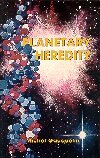
PLANETARY HEREDITY - Michel Gauquelin, $12.95
Contents:
Acknowledgements; Foreword by Prof. Giorgio Piccardi; Publisher's foreword; Preface to the English edition

1. The puzzle of childbirth: Delivery description; Causes & mechanisms of delivery; Extraterrestrial factors & diurnal rhythms; Modern deliveries

2. Birthtimes of famous people: The sky & the diurnal movement; Astrological houses vs: Gauquelin 36 sectors; Celebrities & the planets; Timing the destiny

3. The planetary heredity hypothesis: Birth data of parents & children; Astronomical conditions of the hypothesis

4. Planetary heredity results: The distance factor; Profession & heredity

5. Childbirth conditions: Surgical intervention; Drugs during the delivery; Shift of the effect in recent years; Irreversible evolution

6. Planetary heredity in the family: Effect of sex; Plus-plus parents vs: minus-minus parents; Siblings: effect of birth order

7. Other times of the life: The onset of labor; The time of death

8. Astrology & heredity: Heredity in the signs of the zodiac; Heredity in aspects; Heredity in houses

9. Is there a physical explanation? In search of an explanation; Geomagnetism & planetary heredity; Cosmic anthropology?

Postscript: The 1998 status of planetary heredity: Exploring new directions of research (1966-70); Replicating planetary heredity (1972-77); Computer re-analysis of the data (1979-84); The puzzling 1984 planetary heredity experiment.

Appendix: Methodology & raw results: 1. The gathering of birthdata; 2. Astronomical problems; 3. Statistical results; 4. Table of raw results

Bibliography; Index.

Comment: Published by Neil Michelsen at ACS, the two were close friends. From the back cover:

Over one hundred years ago, Gregor Mendel discovered the fundamental laws of genetic heredity. His work was too revolutionary for the authorities of that time to accept. But, today, Nobel prizes are numerous in the science of genetics. Michael Gauquelin may have made a discovery of the same nature. Through extremely hard work (gathering the birth data of more than 100,000 deliveries) he has demonstrated that we were born under similar cosmic conditions as prevailed at the birth of our parents. Thus, he is the founder of a new genetic science. Mendel, an obscure monk working with plants, discovered patterns of human heredity. Gauquelin graphs a relationship between human heredity & the stars.... This American edition covers both the original studies discussed in the French edition (1966) and updated material from continuous research on this subject.

ACS, 95 pages, paper.


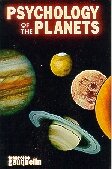
PSYCHOLOGY OF THE PLANETS - Francoise Gauquelin, $12.95
Contents:
Foreword, by Michel Gauquelin

1. The Planets & Personality? Why this study? High peaks after rise & culmination; The trait catalogs; The character traits method; The typical traits lists; The most significant traits

2. The Problems of the Houses: Astrologers expect results in houses 1 & 10; Results actually appear in houses 12 & 9; Nevertheless, the astrologer's keywords achieve results

3. Computers to the Rescue! The ten selected textbooks; Two examples of the procedure; The body of data; The statistical treatment of data

4. Testing the Astrologer's Keywords: Ptolemy's results; On the diagonal; Outside the diagonal; The modern astrologer's results; Clusters of consistent results

5. The Psychology of the Planets: Moon clusters of results; Venus clusters of results; Mars clusters of results; Jupiter clusters of results; Saturn clusters of results; More tests needed

6. Around the Planetary Day: Keyword results synthesized from the ten astrologers; The five previously significant bodies; The five bodies previously not significant; Sun is not significant; The smallest & most distant planets remain a puzzle

7. How Right Are Astrologers? Coherencies from ten selected textbooks

8. Comparing Ancient & Modern Authorities

9. The Most Common Trait Words: How the isolated traits scored; Synthesis of typical & opposed traits for each planet

10. Jupiter's Real Nature: The ill-aspected Jupiter; Test your own Jupiter Image

11. Conclusion

Appendix: Introduction; Sun keywords; Moon keywords; Mercury keywords; Venus keywords; Mars keywords; Jupiter keywords; Saturn keywords; Uranus keywords; Neptune keywords; Pluto keywords; References

References; Gauquelin publications

Comment: This book seeks to answer the question, do traditional astrological keywords stand up to Gauquelin sector analysis? If Jeff Mayo says the Sun is "powerful", do the charts of powerful men have the Sun in Gauquelin sectors? (In the case of the Sun, no.) Keywords from ten classic books were analyzed: Ptolemy's Tetrabiblos (translations: French-Bourdin, English-Robbins), Carter's The Principles of Astrology, Hone's The Modern Textbook of Astrology, Barbault's Defense et Illustration de l'Astrologie, Hall's Astrological Keywords, Mayo's Teach Yourself Astrology, Dal Lee's Dictionary of Astrology, Grell's Keywords, Weingarten's The Study of Astrology, and, finally, Mann's The Round Art. (Note: the English language books are all out of print except for Robbins's Ptolemy & Hall's Astrological Keywords.) How the study was done & the results they got form the basis of this book.

ACS, 113 pages.


UNITED STATES WHEEL OF DESTINY - Diana Bills Stone, $9.00
What were the mystical circumstances surrounding the founding of our country? Why, for example, are we still unable to agree on the time the Declaration of Independence was signed - despite 200 years of study? Notes on the secret life of the founding fathers, forgotten stories handed down orally, how the revolution nearly happened in 1667 in Virginia & lots more. 114 pages including bibliography. AFA, paper.


NEW METHODS OF RECTIFICATION: LINCOLN - T. Patrick Davis, $16.50
The author, by the way, is female. Contents includes: Lincoln's birthday twin; Abraham Lincoln's rectified birth data; Approach to rectification; General rules have exceptions; The first major clue: Nancy Hanks Lincoln; The roving disposition of Thomas Lincoln; Jupiter in Pisces; Saturn; Helio Venus in Gemini; Health; Moon in Capricorn; Checkpoint for a rise in life; History versus the tentative chart; Lincoln and Todd; Fine tuning the birth time; Progressions to the midheaven; Transits to the midheaven; The ascendant degree; The progressed daily angles; The nonpolitical years; The lost Senate race; Lincoln is nominated and elected president; Civil War; Family, associates and, enemy charts - including parents, sister, first love, wife, children, Grant, Sherman, Lee, Booth. 138 pages including chronology and bibliography. AFA, paper.


SEXUAL ASSAULTS: PRE-IDENTIFYING THOSE VULNERABLE - T. Patrick Davis, $11.00
Contents: General considerations; Methods Employed; Assets and liabilities; The personality analysis; The astrological analysis; Midheaven and ascendant statistics; Planetary statistics; Evaluated the aspects; Additional observations; Example horoscopes of survivors; Example horoscopes of murder victims; Corroborative evidence; The culprits. 250 pages. Davis Research Reports.


ASTROLOGY AS A BUSINESS - Doris Chase Doane, $12.00
Contents: Facing up to it; Education; Basic training; Legal aspects and environment; Finances; Setting up and office; Attitude and behavior; work procedures; Burnout and the blahs; Publicity and marketing; Counseling; The last word. 83 pages. AFA, paper.


Astrological Research: Page 1 Page 2 Page 3 Page 4 Page 5


The Astrology Center of America

207 Victory Lane, Bel Air, MD 21014
Tel: 410-638-7761; Fax:410-638-5154; Toll-free (orders only): 800-475-2272

Home Author Index Title Index Subject Index Vedic Books Tarot E-Mail: Dave


Established 1993, The Astrology Center of America is owned & operated by David Roell.
This entire site (AstroAmerica.com) is copyright 1996, 1997, 1998, 1999, 2000 by William R. Roell.
All rights reserved.